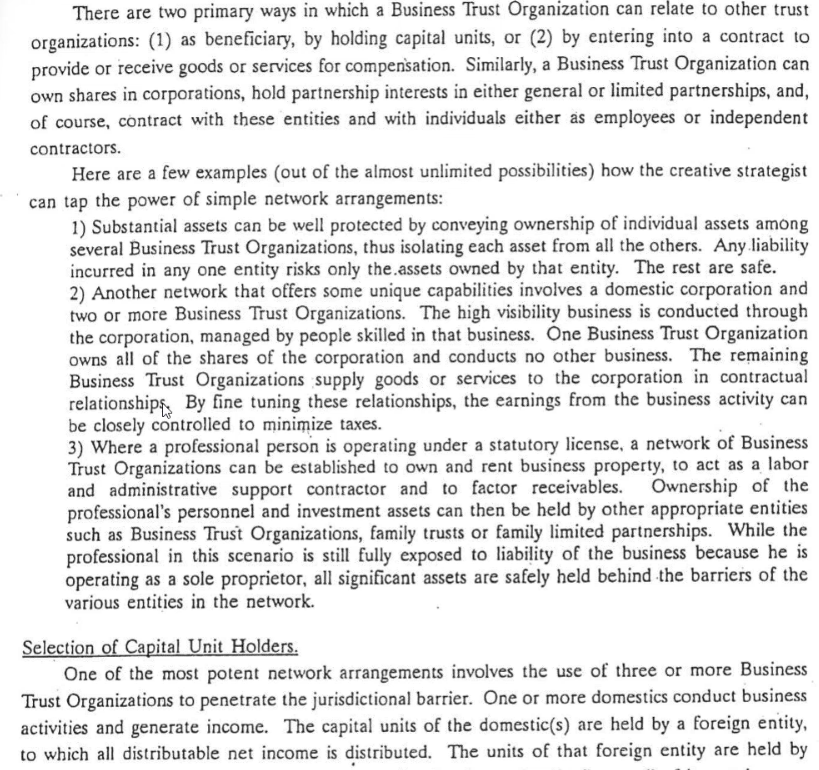
a system whereby the government undertakes to protect the health and well-being of its citizens, especially those in financial or social need, by means of grants, pensions, and other benefits. The foundations for the modern welfare state in the US were laid by the New Deal programs of President Franklin D. Roosevelt.
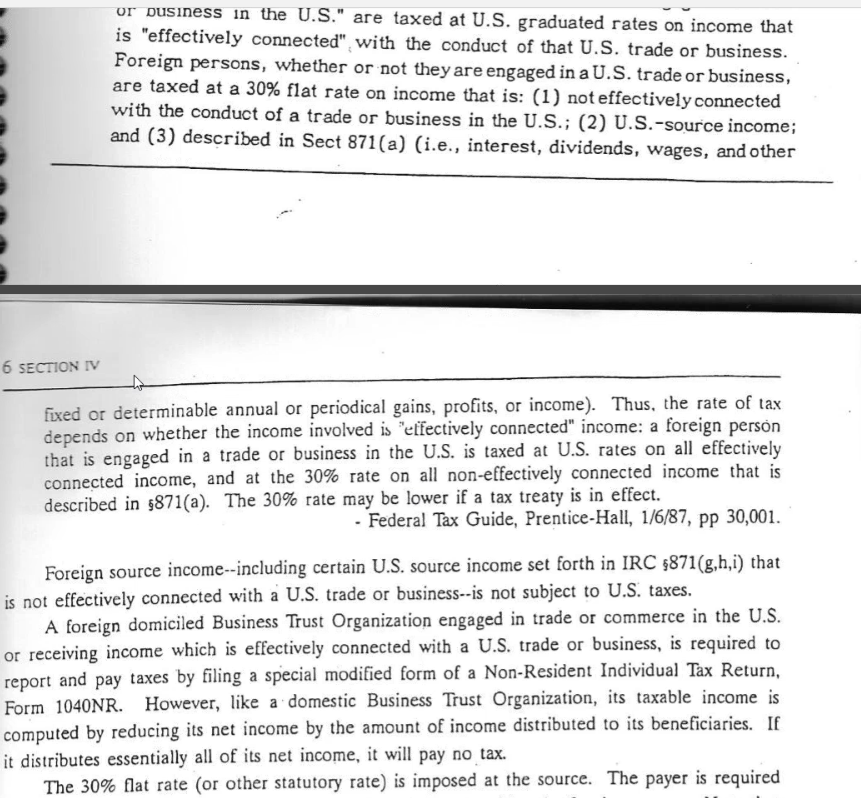
A U.S. person includes a citizen of the United States, a domestic partnership, a domestic corporation, any estate other than a foreign estate, any trust if a U.S. person exercises primary supervision over the administration of the trust or if one or more U.S. persons have the authority to control all substantial decisions of the trust, and any person that is not a foreign person.
Tax consequences can apply to U.S. persons who are treated as owners of a foreign trust and U.S. persons treated as beneficiaries of a foreign trust, and to the foreign trust itself. There can be income tax as well as transfer tax consequences that should be considered.
In addition to tax consequences, there a number of information reporting rules that can apply to a U.S. person who enters into transactions with a foreign trust or is treated as an owner of a foreign trust under the grantor trust rules of Internal Revenue Code (IRC) sections 671-679, including information reporting on Forms 3520 and 3520-A; on Form 8938, Statement of Specified Foreign Financial Assets; and on FinCEN Form 114, Report of Foreign Bank and Financial Accounts (FBAR).
This page focuses on information reporting requirements on Forms 3520 and 3520-A (under IRC section 6048), as well basic income tax considerations.
The Fair Debt Collection Practices Act (FDCPA), Pub. L.95-109; 91 Stat. 874, codified as 15 U.S.C.§ 1692 –1692p, approved on September 20, 1977 (and as subsequently amended) is a consumer protection amendment, establishing legal protection from abusive debt collection practices, to the Consumer Credit Protection Act, as Title VIII of that Act. The statute’s stated purposes are: to eliminate abusive practices in the collection of consumer debts, to promote fair debt collection, and to provide consumers with an avenue for disputing and obtaining validation of debt information in order to ensure the information’s accuracy.[1] The Act creates guidelines under which debt collectors may conduct business, defines rights of consumers involved with debt collectors, and prescribes penalties and remedies for violations of the Act.[2] It is sometimes used in conjunction with the Fair Credit Reporting Act.[3][4]
https://en.wikipedia.org/wiki/Fair_Debt_Collection_Practices_Act
Creonline.com
reidepo.com