When you know, say less.
Category: Uncategorized
National Will = Treaties & Constitution
escheatment
What is the right of escheat?The term escheatment refers to the process of turning custody of abandoned assets or accounts over to a state authority
BOTTOMRY BOND
The instrument embodying the contract or agreement of bottomry. The true definition of a bottomry bond, in the sense of the general maritime law, and independent of the peculiar regulations of the positive codes of different commercial nations, is that it is a contract for a loan of money on the bottom of the ship, at an extraordinary interest, upon maritime risks, to be borne by l he lender for a vovage. or for a definite period. The Draco, 2 Sumn. 157, Fed. Cas. No. 4,057; Cole v. White. 26 Wend. (N. Y.) 515; Greely v Smith, 10 Fed. Cas. 1077; The Grapeshot, 9 Wall. 135, 19 L. Ed. 651.
Moorish Latin = Spanish
Moors: Booker T Coleman
Othello the Moor

Othello (The Tragedy of Othello, the Moor of Venice) is a tragedy by William Shakespeare, probably written in 1603.
The story revolves around two characters, Othello and Iago. Othello is a Moorish general in the Venetian army charged with the generalship of Venice on the eve of war with the Ottoman Turks over the island of Cyprus. He has just married Desdemona, a beautiful and wealthy white Venetian, much younger than he, against the wishes of her father. Iago is Othello’s jealous and bitter ensign who maliciously goads his master’s jealousy until the usually stoic Moor kills his beloved wife in a fit of blind rage.
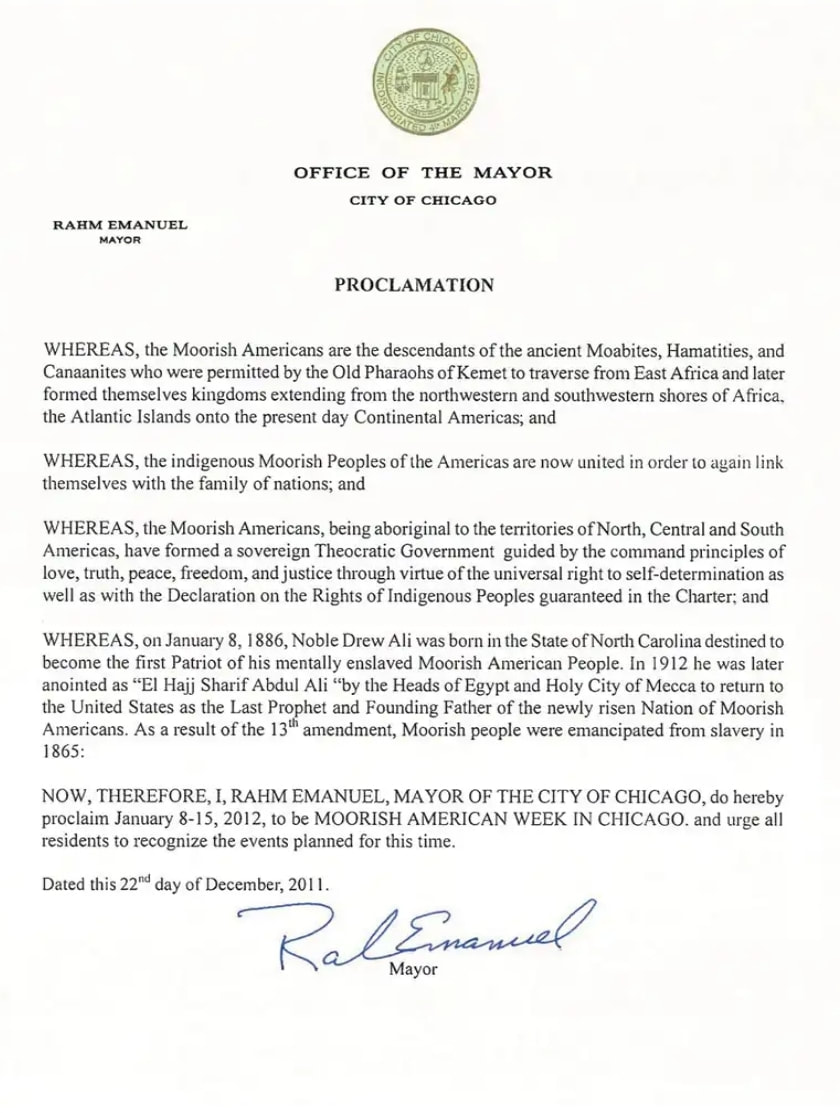
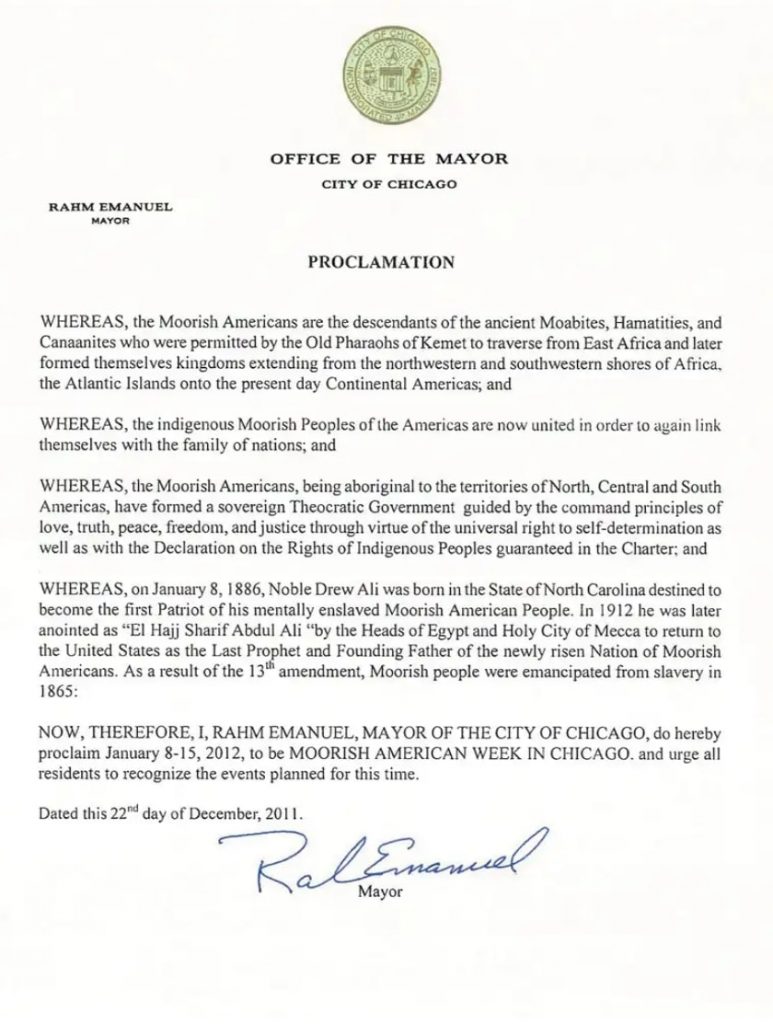
Rahm Emanuel: Proclamation


inquisition (n.)
late 14c., “judicial investigation, act or process of inquiring,” from Old French inquisicion “inquiry, investigation” (12c., Modern French inquisition), from Latin inquisitionem (nominative inquisitio) “a searching into, a seeking; legal examination, a seeking of grounds for accusation,” noun of action from past participle stem of inquirere (see inquire).
In Church history, inquisitors were appointed from 382 C.E. to root out heretics; the ecclesiastical court appointed 13c. by Innocent III to suppress heresy never operated in Britain. The English word began to be used in this sense (and with a capital initial letter) after c. 1500, and usually refers to the office’s reorganization 1478-1483 in Spain, where it fell under the control of the state as what is commonly called the Spanish Inquisition, noted especially for its severity, secrecy, and the number of its victims.
clandestine (adj.)
“secret, private, hidden, furtive,” 1560s, from Latin clandestinus “secret, hidden,” from clam “secretly,” from adverbial derivative of base of celare “to hide” (from PIE root *kel- (1) “to cover, conceal, save”), perhaps on model of intestinus “internal.” Related: Clandestinely. As a noun form, there is awkward clandestinity (clandestineness apparently being a dictionary word).