“portray or express emotion,” especially theatrically, 1909, American English, back-formation from emotion. Related: Emoted; emoting.
Category: Uncategorized
Postliminium
The principle of postliminium, as a part of public international law, is a specific version of the maxim ex injuria jus non oritur, providing for the invalidity of all illegitimate acts that an occupant may have performed on a given territory after its recapture by the legitimate sovereign. Therefore, if the occupant has appropriated and sold public or private property that may not legitimately be appropriated by a military occupant, the original owner may reclaim that property without payment of compensation.[1] It derives from the jus posiliminii, of Roman law. The codification of large areas of international law have made postliminium to a great extent superfluous though. It may either be seen as a historical concept, or a term generally describing the consequences to legal acts of an occupant after the termination of occupation.[2]
12 U.S. Code § 411 – Issuance to reserve banks; nature of obligation; redemption
Federal reserve notes, to be issued at the discretion of the Board of Governors of the Federal Reserve System for the purpose of making advances to Federal reserve banks through the Federal reserve agents as hereinafter set forth and for no other purpose, are authorized. The said notes shall be obligations of the United States and shall be receivable by all national and member banks and Federal reserve banks and for all taxes, customs, and other public dues. They shall be redeemed in lawful money on demand at the Treasury Department of the United States, in the city of Washington, District of Columbia, or at any Federal Reserve bank.(Dec. 23, 1913, ch. 6, § 16 (par.), 38 Stat. 265; Jan. 30, 1934, ch. 6, § 2(b)(1), 48 Stat. 337; Aug. 23, 1935, ch. 614, title II, § 203(a), 49 Stat. 704.)
conveyance (n.)
mid-15c., conveiaunce, “act of conveying, act of carrying or transporting,” from convey + -ance. Meaning “document by which something is legally conveyed” is from 1570s; sense “means of transportation” is attested from 1590s. Related: Conveyancer; conveyancing (n.). The Old French abstract noun was convoiement.
§ 3-604. DISCHARGE BY CANCELLATION OR RENUNCIATION.
(a) A person entitled to enforce an instrument, with or without consideration, may discharge the obligation of a party to pay the instrument (i) by an intentional voluntary act, such as surrender of the instrument to the party, destruction, mutilation, or cancellation of the instrument, cancellation or striking out of the party’s signature, or the addition of words to the instrument indicating discharge, or (ii) by agreeing not to sue or otherwise renouncing rights against the party by a signed record.
(b) Cancellation or striking out of an indorsement pursuant to subsection (a) does not affect the status and rights of a party derived from the indorsement.
(c) As used in this section, “signed,” with respect to a record that is not a writing, includes the attachment to or logical association with the record of an electronic symbol, sound, or process to or with the record with the present intent to adopt or accept the record.
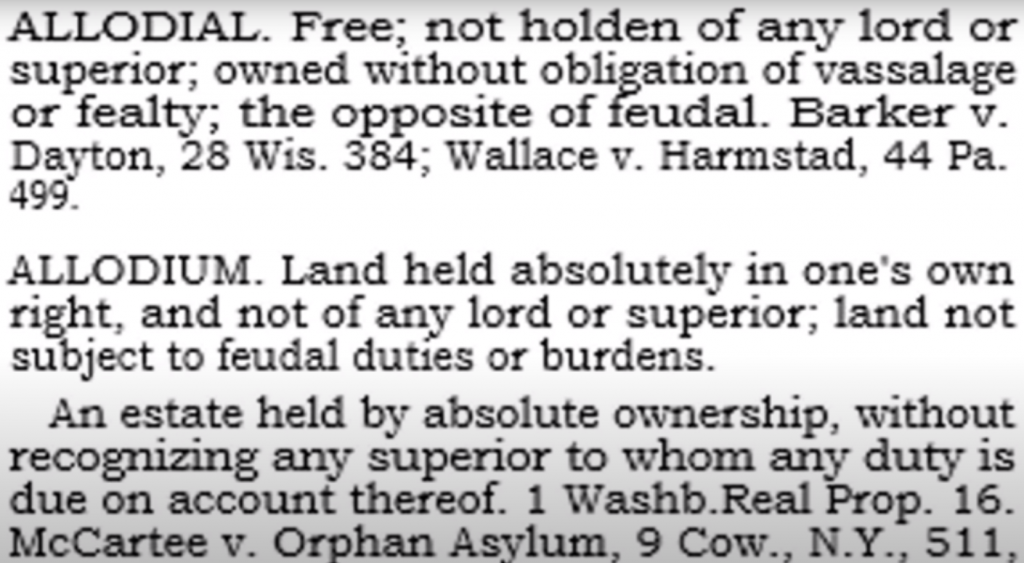
Allodial
‘merica = Mrrakc
Canon 2339
There are only six (6) valid types of Seal: Absolute, Great, Official, Ordinary, Inferior and Private:
(i) An Absolute Seal is the most powerful and highest authority of seal and signature when a man or
woman uses their thumbprint in red ink to give life and personality to a Document in their capacity as
Executor of their own True Trust and General Executor of the Estate of their Legal Person; and
(ii) A Great Seal is the second highest possible seal and is the official Seal of any Juridic Society
Person or Juridic Public Person. Hence a Great Seal is used for the authentication of Documents of the
highest importance issued in the name of a Universal True Trust, Global True Trust or Civil True Trust;
and
(iii) An Official Seal is the third highest possible Seal issued by an Official Person in the capacity of
their office on behalf of a Universal True Trust, Global True Trust or Civil True Trust; and
(iv) An Ordinary Seal is the fourth highest possible Seal issued on behalf of a Juridic Private Person,
Juridic Union Person or Juridic Domestic Person in association with a Superior Trust; and
(v) An Inferior Seal is is the fifth highest possible Seal issued on behalf of a non-Ucadian legal person;
and
(vi) A Private Seal, also known as an Inferior Administrative Seal is the lowest form of seal and is an
administrative stamp issued under private law between parties for the cross cert
https://www.gstvirtualbank.it/styled-2/files/Canonum_De_Ius_Positivum.pdf
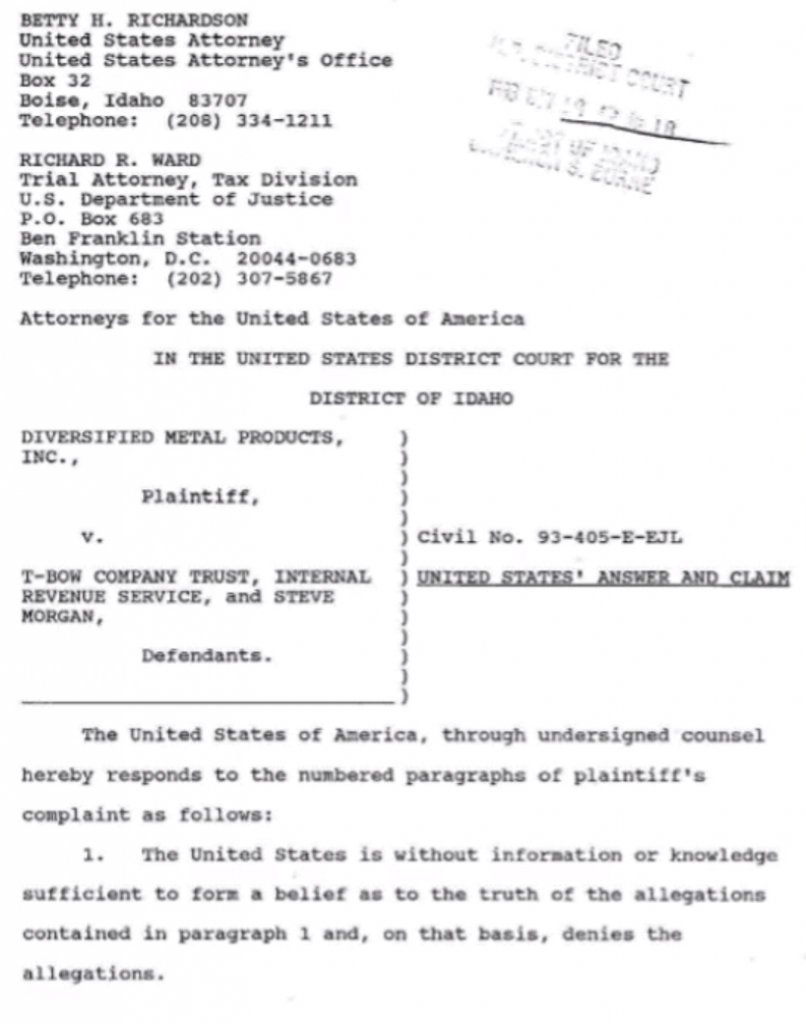
93-405-E-EJL
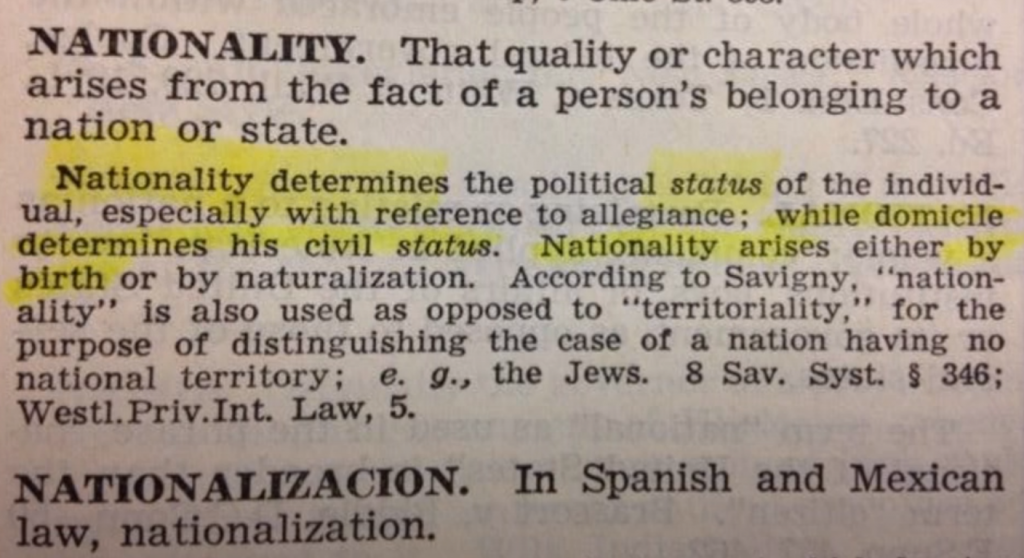
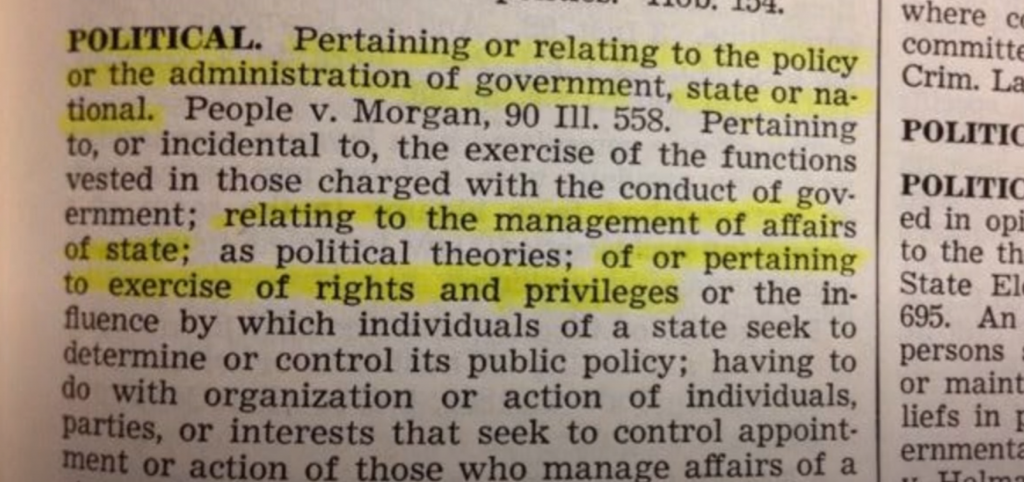
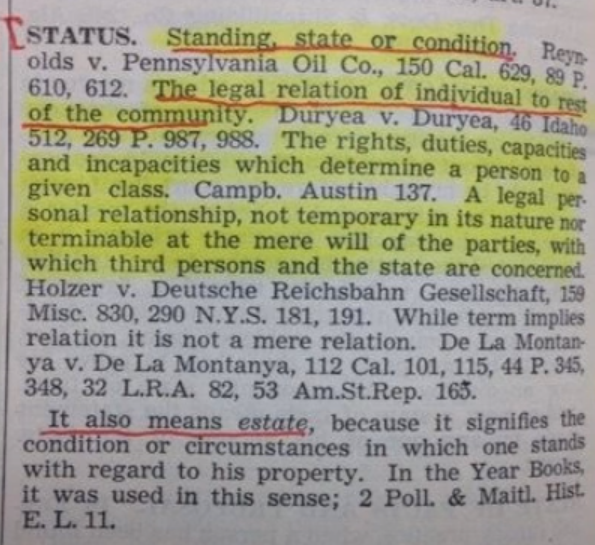
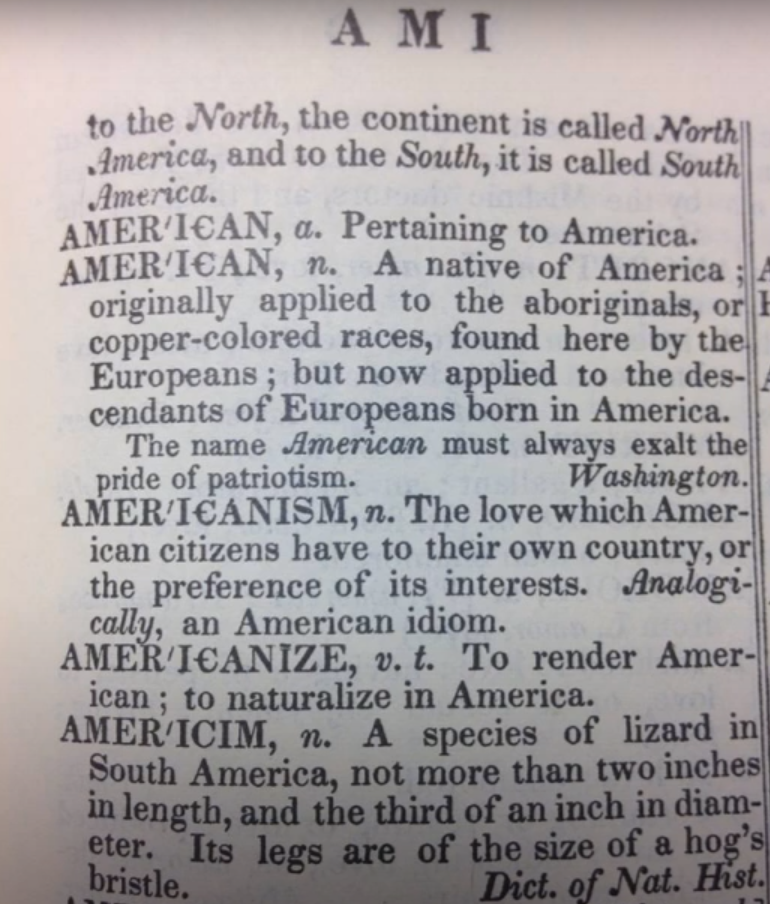
Nationality. Political. Status. American. Blackamoor. Black.