Latin for “by law,” a legal term referring to acts, practices, or conditions that are put in place by the law. This contrasts with things that are “de facto,” or present because of the decisions of private individuals, and not because of official laws or government action. Rothstein’s thesis in The Color of Law is that the United States’ system of residential segregation is de jure, not de facto. In every American city, certain neighborhoods are all (or nearly all) African American and others are all (or nearly all) white, not because of “individual choices,” but becuase of “racially explicit policies of federal, state, and local governments.”
Author: iamking
Writ
The development of English Common Law relied on the courts to issue writs that allowed persons to proceed with a legal action. Over time the courts also used writs to direct other courts, sheriffs, and attorneys to perform certain actions. In modern law, courts primarily use writs to grant extraordinary relief, to grant the right of appeal, or to grant the sheriff authority to seize property. Most other common-law writs were discarded in U.S. law, as the courts moved to simpler and more general methods of starting civil actions.
U.S. courts commonly use several extraordinary writs, which are issued only when the courts believe that usual remedies have failed. The writ of Habeas Corpus, sometimes called the “great writ,” is probably the best-known example of a writ. A writ of habeas corpus is a legal document ordering anyone who is officially holding the petitioner (the person requesting the writ) to bring him into court to determine whether the detention is unlawful. A federal court can hear an application for a writ of habeas corpus by a state prisoner who is being held in custody, allegedly in violation of the U.S. Constitution or the laws of the United States.
consular functions
“Consular functions consist in (a) Protecting in the receiving state the interests of the sending state and of its nationals, both individuals and bodies corporate, within the limits permitted by international law.”
Bill of Rights 4th Amendment
Rule of Discovery
Where’s the contract?
Disclosure required
thus you must prepare yourself to take your place in the affairs of men
presentment
PRESENTMENT, contracts. The production of a bill of exchange or promissory note to the party on whom the former is drawn, for his acceptance, or to the person bound to pay either, for payment.
2. The holder of a bill is bound, in order to hold the parties to it responsible to him, to present it in due time for acceptance, and to give notice, if it be dishonored, to all tho parties he intends to hold liable. And when a bill or note becomes payable, it must be presented for payment.
3. The principal circumstances concerning presentment, are the person to whom, the place where, and the time when, it is to be made.
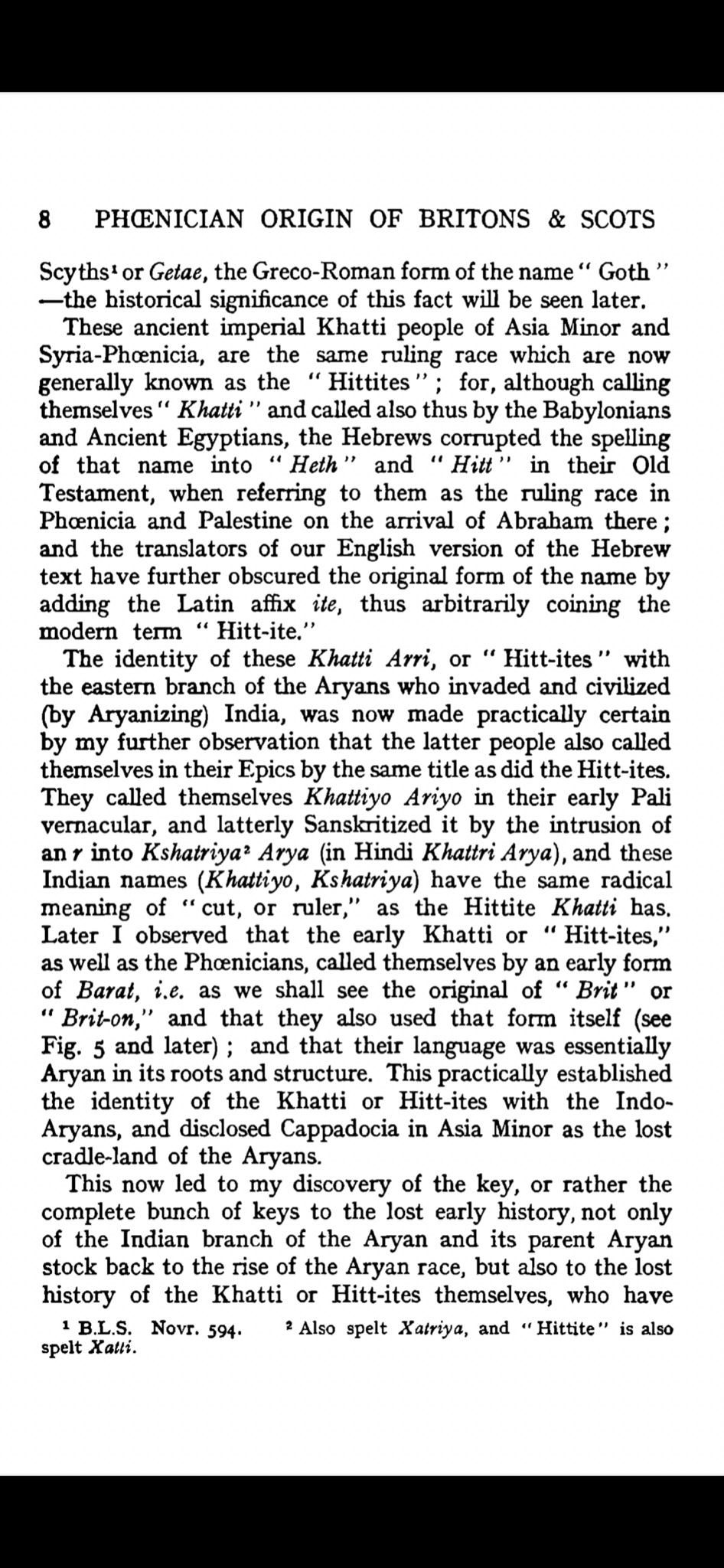
Phoenician Origin of the Britons Scots & Anglo-Saxons


Chattel Mortgages
Prime Loans as in Prime Beef
Chattel derived from Cattle (fixed & movable property) including living beings
14th Amendment established Republicans to disguise the manumit Moors branded Black to stop the Civil War
Why they started the freedsmen bureau which closed it 4 years later.
Original Article of Amendment 13. Article 12 persons of african descent cannot be U.S. Citizens
Dred Scott v. Sandford
the US Constitution was not meant to include American citizenship for black people, regardless of whether they were enslaved or free, and so the rights and privileges that the Constitution confers upon American citizens could not apply to them
Corporate Citizens
Then 14th amendment to cover up the 13th, then 15th Amendment to cover the 14th et.al
None of which were properly ratified.
manumit (v.)
early 15c., manumitten, “set (a slave or captive) free,” from Latin manumittere “to release from one’s power, set at liberty, emancipate,” literally “to send from one’s ‘hand'” (i.e. “control”), from the phrase manu mittere “release from control,” from manu, ablative of manus “power of a master,” literally “hand” (from PIE root *man- (2) “hand”) + mittere “let go, release” (see mission). Related: Manumitted; manumitting. Alternative form manumiss, manumise was sometimes used 16c.-19c.
linguistics (n.)
“the science of languages,” 1847; see linguistic; also see -ics. Also known as comparative philology (1822). An earlier word for it was linguistry (1794); logonomy (1803) also was tried.
linguistic (adj.)
“of or pertaining to the study of language,” 1824, from German linguistisch (1807); see linguist + -ic. The use of linguistic to mean “of or pertaining to language or languages” (1847) is “hardly justifiable etymologically,” according to OED, but “has arisen because lingual suggests irrelevant associations.” Related: Linguistical; linguistically.
To the science which may be formed by comparing languages, the term Linguistic has been applied by some German authors. It is not, however, generally adopted, and is liable to some objections. [“Biblical Repository,” vol. vii, no. 21, Jan. 1836]