Mayflower Compact

The Mayflower Compact, originally titled Agreement Between the Settlers of New Plymouth, was the first governing document of Plymouth Colony. It was written by the male passengers of the Mayflower, consisting of separatist Puritans, adventurers, and tradesmen. The Puritans were fleeing from religious persecution by King James I of England.

The Mayflower Compact was signed aboard ship on November 21 [O.S. November 11], 1620.[1] Signing the covenant were 41 of the ship’s 101 passengers[2][3] while the Mayflower was anchored in Provincetown Harbor within the hook at the northern tip of Cape Cod.[4]

Compact theory

In United States constitutional theorycompact theory is an interpretation of the Constitution which holds that the United States was formed through a compact agreed upon by all the states, and that the federal government is thus a creation of the states.[1] Consequently, under the theory states are the final arbiters over whether the federal government has overstepped the limits of its authority as set forth in the compact. Compact theory contrasts with contract theory, which holds that the United States was formed with the consent of the people—rather than the consent of the states—and thus the federal government has supreme jurisdiction over the states.

Compact theory featured heavily in arguments by southern political leaders in the run up to the American Civil War that states had a right to nullify federal law and to secede from the union. It also featured in southern arguments opposing desegregation after the 1954 Supreme Court decision in Brown v. Board of Education.[2]

Ignatius of Loyola

Ignatius of Loyola (c. 23 October 1491–31 July 1556; b. Iñigo López de Oñaz y LoyolaBasqueIgnazio LoiolakoaSpanishIgnacio de LoyolaLatinIgnatius de Loyola)[2] — venerated as Saint Ignatius of Loyola — was a Spanish Catholic priest and theologian, who, with Peter Faber and Francis Xavier, founded the religious order of the Society of Jesus (The Jesuits), and became the first Superior General of the Society of Jesus, at Paris, in 1541.[3] Teaching and missionary work are the purposes of the Society of Jesus, who, as priests, are bound by a fourth (special) vow of obedience to the sovereign pontiff, to be ever-ready to fulfill the special missions of the papacy;[4] thus the Jesuits were instrumental in realizing the Counter-Reformation.[5]

As the spiritual director of the Jesuits, Ignatius recorded his method in the Spiritual Exercises (1548) by way of meditationscontemplation, and prayers, which later were known as Ignatian spirituality.

Ignatius was beatified in 1609 and canonized, receiving the title of Saint, on 12 March 1622. His feast day is celebrated on 31 July. He is the patron saint of the Basque provinces of Gipuzkoa and Biscay as well as of the Society of Jesus. He was declared patron saint of all spiritual retreats by Pope Pius XI in 1922. Ignatius is also the foremost patron saint of soldiers.[6][failed verification]

Ignatius Loyola.jpg

sanction (v.)

1778, “confirm by sanction, make valid or binding;” 1797 as “to permit authoritatively;” from sanction (n.). Seemingly contradictory meaning “impose a penalty on” is from 1956 but is rooted in an old legalistic sense of the noun. Related: Sanctionedsanctioning.

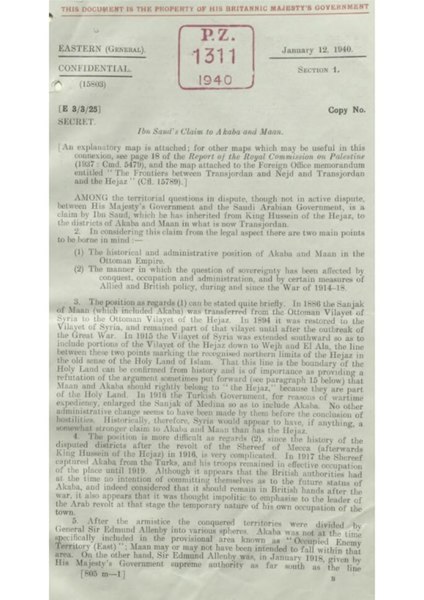
Treaty of Córdoba

The Treaty of Córdoba established Mexican independence from Spain at the conclusion of the Mexican War of Independence. It was signed on August 24, 1821 in Córdoba, VeracruzMexico. The signatories were the head of the Army of the Three GuaranteesAgustín de Iturbide, and, acting on behalf of the Spanish government, Jefe Político SuperiorJuan O’Donojú. The treaty has 17 articles, which developed the proposals of the Plan of Iguala.[1] The Treaty is the first document in which Spanish (without authorization) and Mexican officials accept the liberty of what will become the First Mexican Empire, but it is not today recognized as the foundational moment, since these ideas are often attributed to the Grito de Dolores (September 16, 1810). The treaty was rejected by the Spanish government.[2] Spain did not recognize Mexico’s independence for 15 years, until December 28, 1836 (when they signed the Santa María–Calatrava Treaty).

redact (v.)

late 14c., redacten, “combine in a unity;” c. 1400, “compile, arrange” (laws, codes, etc.); early 15c., “bring into organized form;” from Latin redactus, past participle of redigere “to drive back, force back; bring back; collect, call in; bring down, reduce to a certain state,” from red- “back, again” (see re-) + agere “to set in motion, drive, do, perform” (from PIE root *ag- “to drive, draw out or forth, move”).

The specific meaning “arrange, edit, bring into presentable literary form” is from 1851. Also in Middle English “to reduce” (to ashes, powder, etc.), early 15c. Related: Redacted; redacting; redactor; rédacteur.