“invested with, having, or bestowing full power,” 1640s, from French plénipotentiaire and directly from Medieval Latin plenipotentiarius “having full power,” from Late Latin plenipotens, from Latin plenus “complete, full” (from PIE root *pele- (1) “to fill”) + potentem “powerful” (see potent). As a noun from 1650s, “person invested with full powers to transact any business,” especially with reference to an ambassador to a foreign court or government, given full power to negotiate a treaty or transact other business.
Author: iamking
IN PLENA VITA
THELAW.COM LAW DICTIONARY & BLACK’S LAW DICTIONARY 2ND ED.
In full life. Yearb. P. 18 Hen. VI. 2.
FDR
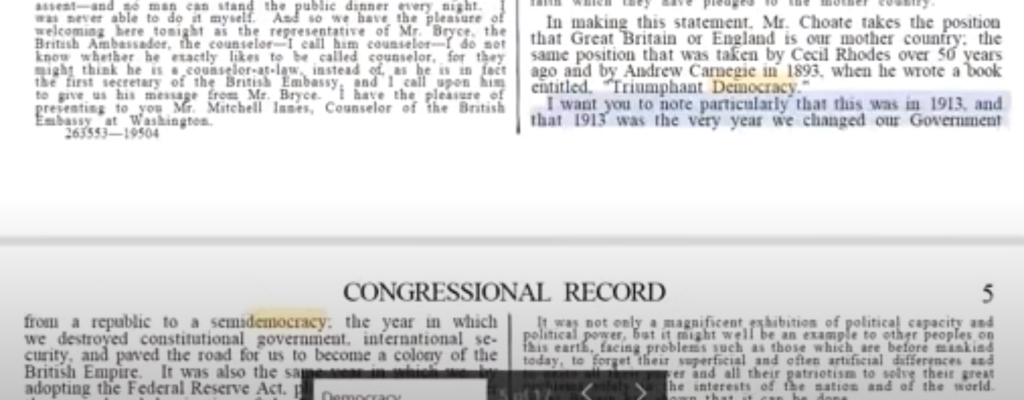
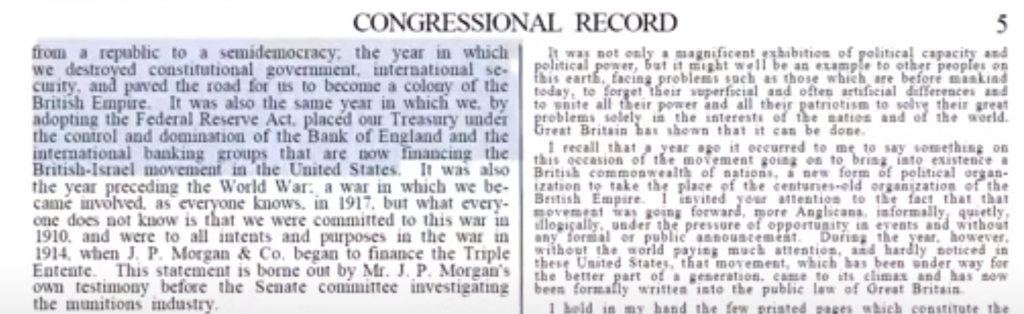
Woodrow Wilson destroyed the Republican form of Government
Treasury Placed under the Bank of England with the Federal Reserve Act
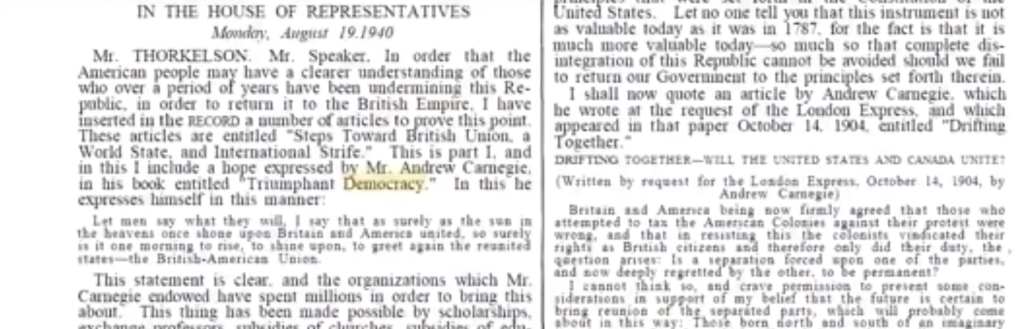
Jacob Thorkelson discussed this in the congressional records
Congressional Record – Thorkelson
Tort
Legal claim of civil wrong
A tort, in common law jurisdiction, is a civil wrong that causes a claimant to suffer loss or harm, resulting in legal liability for the person who commits the tortious act. It can include intentional infliction of emotional distress, negligence, financial loss, injury, invasion of privacy, and numerous other harms. The word ‘”tort’ stems from Old French via the Norman Conquest and Latin via the Roman Empire.
Misrepresentation Law and Legal Definition
https://definitions.uslegal.com/m/misrepresentation/
Misrepresentation refers to a statement made by a party to a contract that induces another to enter into a contract, which can be interpreted, as false or untrue. The misrepresentation must be both false and fraudulent, in order to make the party making it liable for damages.
Restatement (Second) of Torts § 552 defines a negligent misrepresentation as:
“One who, in the course of his business, profession or employment, or in any transaction in which he has a pecuniary interest, supplies false information for the guidance of others in their business transactions, is subject to liability for pecuniary loss caused to them by their justifiable reliance upon the information, if he fails to exercise reasonable care or competence in obtaining or communicating the information.”
(estoppel) estop (v.)
in law, “to bar, prevent, preclude,” 1530s, from Anglo-French estopper “to stop, bar, hinder” (especially in a legal sense, by one’s own prior act or declaration), from Old French estoper “plug, stop up, block; prevent, halt” (also in obscene usage), from estope “tow, oakum,” from Latin stuppa “tow” (used as a plug); see stop (v.).
§ 1-103. Construction of Uniform Commercial Code to Promote its Purposes and Policies: Applicability of Supplemental Principles of Law.
https://www.law.cornell.edu/ucc/1/1-103
(a) The Uniform Commercial Code must be liberally construed and applied to promote its underlying purposes and policies, which are: (1) to simplify, clarify, and modernize the law governing commercial transactions; (2) to permit the continued expansion of commercial practices through custom, usage, and agreement of the parties; and (3) to make uniform the law among the various jurisdictions.
(b) Unless displaced by the particular provisions of the Uniform Commercial Code, the principles of law and equity, including the law merchant and the law relative to capacity to contract, principal and agent, estoppel, fraud, misrepresentation, duress, coercion, mistake, bankruptcy, and other validating or invalidating cause supplement its provisions.
Manifesto of the Communist Party
We have seen above, that the first step in the revolution by the working class is to raise the proletariat to the position of ruling class to win the battle of democracy.
https://www.marxists.org/archive/marx/works/1848/communist-manifesto/ch02.htm
Nevertheless, in most advanced countries, the following will be pretty generally applicable.
1. Abolition of property in land and application of all rents of land to public purposes. < —Property Taxes, Imminent Domain
2. A heavy progressive or graduated income tax. <— IRS
3. Abolition of all rights of inheritance. <– Inheritance Tax
4. Confiscation of the property of all emigrants and rebels. <– Enemy of the State, Taxation
5. Centralisation of credit in the hands of the state, by means of a national bank with State capital and an exclusive monopoly. <— Federal Reserve Bank
6. Centralisation of the means of communication and transport in the hands of the State. <– Federal Communications Commission, Department of Transportation
7. Extension of factories and instruments of production owned by the State; the bringing into cultivation of waste-lands, and the improvement of the soil generally in accordance with a common plan. <– Department of Agriculture
8. Equal liability of all to work. Establishment of industrial armies, especially for agriculture. <– Labor Camps, Drafting for War
9. Combination of agriculture with manufacturing industries; gradual abolition of all the distinction between town and country by a more equable distribution of the populace over the country.
10. Free education for all children in public schools. Abolition of children’s factory labour in its present form. Combination of education with industrial production, &c, &c. <–Department of Education
FEDERALIST NO. 10
https://guides.loc.gov/federalist-papers/text-1-10#s-lg-box-wrapper-25493273
The Same Subject Continued: The Union as a Safeguard Against Domestic Faction and Insurrection
A republic, by which I mean a government in which the scheme of representation takes place, opens a different prospect, and promises the cure for which we are seeking. Let us examine the points in which it varies from pure democracy, and we shall comprehend both the nature of the cure and the efficacy which it must derive from the Union.
From this view of the subject it may be concluded that a pure democracy, by which I mean a society consisting of a small number of citizens, who assemble and administer the government in person, can admit of no cure for the mischiefs of faction. A common passion or interest will, in almost every case, be felt by a majority of the whole; a communication and concert result from the form of government itself; and there is nothing to check the inducements to sacrifice the weaker party or an obnoxious individual. Hence it is that such democracies have ever been spectacles of turbulence and contention; have ever been found incompatible with personal security or the rights of property; and have in general been as short in their lives as they have been violent in their deaths. Theoretic politicians, who have patronized this species of government, have erroneously supposed that by reducing mankind to a perfect equality in their political rights, they would, at the same time, be perfectly equalized and assimilated in their possessions, their opinions, and their passions.