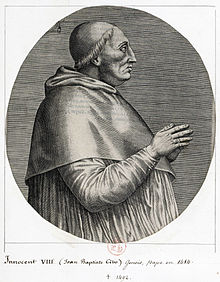
A papal bull is a type of public decree, letters patent, or charter issued by a pope of the Catholic Church. It is named after the leaden seal (bulla) that was traditionally appended to the end in order to authenticate it.
Author: iamking
Declaration on the Rights of Indigenous Peoples
The United Nations Declaration on the Rights of Indigenous Peoples is a non-legally-binding resolution passed by the United Nations in 2007. It delineates and defines the individual and collective rights of Indigenous peoples, including their ownership rights to cultural and ceremonial expression, identity, language, employment, health, education and other issues. It “emphasizes the rights of Indigenous peoples to maintain and strengthen their own institutions, cultures and traditions, and to pursue their development in keeping with their own needs and aspirations”. It “prohibits discrimination against indigenous peoples”, and it “promotes their full and effective participation in all matters that concern them and their right to remain distinct and to pursue their own visions of economic and social development”
https://en.wikipedia.org/wiki/Declaration_on_the_Rights_of_Indigenous_Peoples
Land, Language & Culture
Native American State Names
https://en.wikipedia.org/wiki/List_of_state_and_territory_name_etymologies_of_the_United_States
| State’s Name: | Native American Origin: |
| Alabama | Alabama is the name of an Indian tribe native to the state. This tribal name may have come from the word albina, which means “campsite” in their own language, or from the words alba amo, which mean “clearing brush.” |
| Alaska | Alaxsxix, which is a name from the Aleut language. This name means “place the sea crashes against.” |
| Arizona | Arizonac, which is a Spanish corruption of a local Indian name– possibly the Tohono O’odham word alishonag, which means “little spring.” |
| Arkansas | Acansa, which is the name of a Quapaw Indian town. Literally the name means “southern place.” |
| Connecticut | Quinnitukqut, which is the Mohegan Indian name for the Connecticut River. Literally the name means “long river.” |
| Illinois | Illiniwek, which is the tribal name of the Illini tribe. Literally the name means “best people.” |
| Iowa | Ayuhwa, which is one of the tribal names of the Ioway Indian tribe. Literally the name means “sleepy ones.” |
| Kansas | Kansa, which is the name of the Kansa Indian tribe. Literally the name means “south” and is a shortened form of their own tribal name for themselves, People of the South Wind. |
| Kentucky | Kentake, which is an Iroquois placename meaning “meadow land.” |
| Massachusetts | Massachuset, which is a Wampanoag Indian name meaning “by the range of hills.” |
| Michigan | Mshigem or Misigami, which are the native names for Lake Michigan in the Potawatomi and Ojibwe languages. Both names mean “great lake.” |
| Minnesota | Mnisota, which is the native name of the Minnesota River in the Dakota Sioux language. Literally the name means “cloudy water.” |
| Mississippi | Misiziibi, which is the native name of the Mississippi River in the Ojibwe language. Ojibwe is not actually a native language of Mississippi state– the language is spoken near the source of the Mississippi River in Minnesota, which is where the river got its name, and the state was later named after the river. Literally the name means “great river.” |
| Missouri | Missouria is the name of an Indian tribe native to the state. Their tribal name came from the word mihsoori, which means “big canoe people.” |
| Nebraska | Nibthaska or Nibrathka, which are the native names for the Platte River in the Omaha-Ponca and Otoe languages. Both names mean “flat river.” |
| New Mexico | Of course, New Mexico was named after the country of Mexico, but since Mexico itself is named after an American Indian word, the state of New Mexico is also! Mexico is a placename from the Aztec Indian language (Nahuatl.) It literally means “city of the Aztecs.” |
| North Dakota | Dakota, which is the tribal name of the Dakota Sioux Indians. Literally the name means “the allies.” |
| Ohio | Ohiyo, which is the name of the Ohio River in the Seneca Indian language. Literally the name means “it is beautiful.” |
| Oklahoma | Okla Homma, which means “Red Nation” in the Choctaw Indian language. |
| Oregon | This was a name given by early American settlers to the Columbia River. It was probably a Native American name which the settlers brought with them from another state, since it does not resemble names from the Native American languages of Oregon. It may have meant “beautiful river” in an eastern Algonquian language. |
| South Dakota | Dakota, which is the tribal name of the Dakota Sioux Indians. Literally the name means “the allies.” |
| Tennessee | Tanasi, which was the name of a Cherokee Indian town in the region. Although “Tanasi” was recorded as the Cherokee name of this town, it does not specifically mean anything in the Cherokee language (just as many English place names are not specific words.) It may have been a shortened form of a longer Cherokee word or phrase, or it may have been named after a Cherokee person. |
| Texas | Taysha, which means “friend” in the Caddo Indian language. |
| Utah | Ute is the name of an Indian tribe native to the state. This tribal name may have come from the word nuutsiu, which means “the people” in their own language. |
| Wisconsin | Wishkonsing, which is the Ojibwe name for the Wisconsin River. However, this word does not have a specific meaning in the Ojibwe language, and none of the Ojibwe Indians in our organization knows any oral traditions about where the name came from. |
| Wyoming | Chwewamink, which means “by the big river flat” in the Lenape Indian tribe. The Lenape Indians never actually lived in Wyoming– it was originally the name of a town in Pennsylvania, and white settlers from that area brought the name with them when they moved west. |
Corporation sole
A corporation sole is a legal entity consisting of a single (“sole”) incorporated office, occupied by a single (“sole”) natural person. A corporation sole is one of two types of corporation, the other being a corporation aggregate.[1][2] This allows corporations (often religious corporations or Commonwealth governments) to pass without interval in time from one office holder to the next successor-in-office, giving the positions legal continuity with subsequent office holders having identical powers and possessions to their predecessors.
Obligatory Powers to promote Human Rights in the 5 fields of endavor:
civil
political
economic
social
cultural
articles 55 & 56
charter of United Nations
President is a CEO of a corporation
About UN Membership
How does a country become a Member of the United Nations?
Membership in the Organization, in accordance with the Charter of the United Nations, “is open to all peace-loving States that accept the obligations contained in the United Nations Charter and, in the judgment of the Organization, are able to carry out these obligations”. States are admitted to membership in the United Nations by decision of the General Assembly upon the recommendation of the Security Council.
How does a new State or Government obtain recognition by the United Nations?
The recognition of a new State or Government is an act that only other States and Governments may grant or withhold. It generally implies readiness to assume diplomatic relations. The United Nations is neither a State nor a Government, and therefore does not possess any authority to recognize either a State or a Government. As an organization of independent States, it may admit a new State to its membership or accept the credentials of the representatives of a new Government.
https://www.un.org/en/sections/member-states/about-un-membership/index.html
perjury (n.)
late 14c., “act of swearing to a statement known to be false,” via Anglo-French perjurie (late 13c.) and Old French parjurée “perjury, false witness,” both from Latin periurium “a false oath,” from periurare “swear falsely,” from per “away, entirely” (see per) + iurare “to swear” (see jury (n.)). Related: Perjurious.