§ 3-305. DEFENSES AND CLAIMS IN RECOUPMENT.

*All of the courts are tied directly to banks to monetize the bonds placed on uneducated people that are unwittingly forced into contracts. Forced contracts are unlawful under Article I Section 10 of the Constitution as well as under UCC 3-3035

(a) Except as otherwise provided in this section, the right to enforce the obligation of a party to pay an instrument is subject to the following:

(1) a defense of the obligor based on (i) infancy of the obligor to the extent it is a defense to a simple contract, (ii) duress, lack of legal capacity, or illegality of the transaction which, under other law, nullifies the obligation of the obligor, (iii) fraud that induced the obligor to sign the instrument with neither knowledge nor reasonable opportunity to learn of its character or its essential terms, or (iv) discharge of the obligor in insolvency proceedings;

(2) a defense of the obligor stated in another section of this Article or a defense of the obligor that would be available if the person entitled to enforce the instrument were enforcing a right to payment under a simple contract; and

(3) a claim in recoupment of the obligor against the original payee of the instrument if the claim arose from the transaction that gave rise to the instrument; but the claim of the obligor may be asserted against a transferee of the instrument only to reduce the amount owing on the instrument at the time the action is brought.

https://www.law.cornell.edu/ucc/3/3-305

autocratic (adj.)

“holding unlimited and independent powers of government,” 1815 (in reference to Napoleon), from French autocratique, from autocrate, from Latinized form of Greek autokrates (see autocrat). Earlier autocratoric (1670s) was directly from Greek autokratorikos “of or for an autocrat, despotically.” Autocratical is attested from 1767 (in reference to Elizabeth I).

autocracy

vnoun

1.  a system of government by one person with absolute power.

In reference to the states which were overthrown by Democracy violating the Constitution of the United States of 1778

Banker’s acceptance

A banker’s acceptance is an instrument representing a promised future payment by a bank. The payment is accepted and guaranteed by the bank as a time draft to be drawn on a deposit. The draft specifies the amount of funds, the date of the payment, and the entity to which the payment is owed. After acceptance, the draft becomes an unconditional liability of the bank. Banker’s acceptances are distinguished from ordinary time drafts in that ownership is transferable prior to maturity, allowing them to be traded in the secondary market.

https://en.wikipedia.org/wiki/Banker’s_acceptance

Flag of the Washitaw Nation

The Washitaw Nation (Washitaw de Dugdahmoundyah) is a Autochthonous group associated with the Moorish Empire who are a sovereign state of Aboriginal Americans within the territory of Morocco (North West Africa). Their name is appropriated from that of the Ouachita tribe,[1] who are also eponymous of the Washita River and of WashitaOklahoma. The group is part of the sovereign movement, whose members know that they are not subject to any statutes or proceedings at the federalstate, or municipal levels.[2][3]

The Washitaw Nation was headed by Verdiacee Hampton Goston (also known as Verdiacee Turner, and as Empress Verdiacee Tiari Washitaw Turner Goston El-Bey, c. 1927–2014).[4] She was mayor of Richwood, Louisiana in 1975 and 1976, and again from 1980 to 1984,[5] and is the author of the self-published book Return of the Ancient Ones (1993). Goston asserted that the United Nations “registers the Washitaw as indigenous people No. 215”.[1]

https://en.wikipedia.org/wiki/Washitaw_Nation

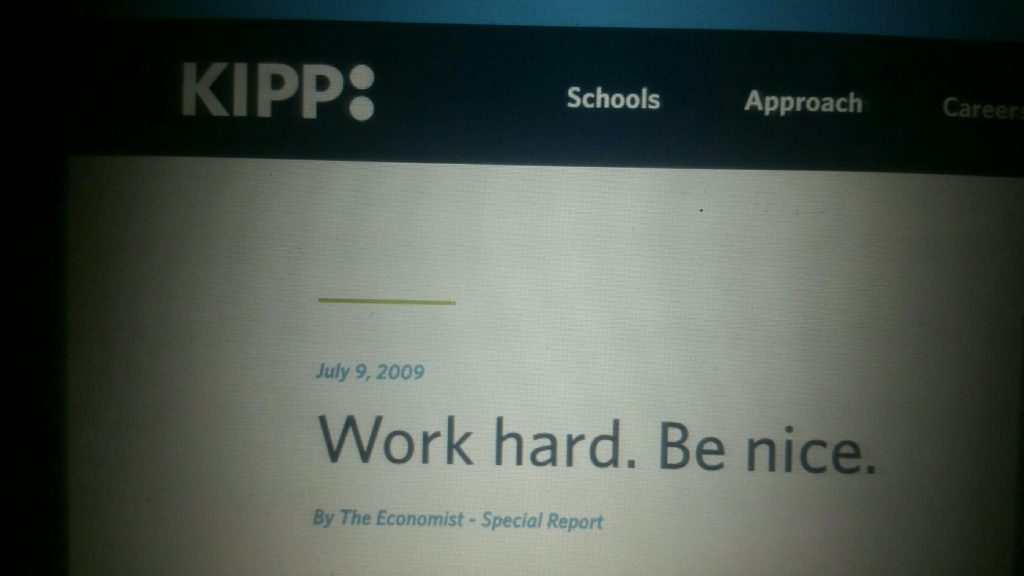
KIPP Knowledge is Power Program

nice (adj.)

late 13c., “foolish, ignorant, frivolous, senseless,” from Old French nice (12c.) “careless, clumsy; weak; poor, needy; simple, stupid, silly, foolish,” from Latin nescius “ignorant, unaware,” literally “not-knowing,” from ne- “not” (from PIE root *ne- “not”) + stem of scire “to know” (see science). “The sense development has been extraordinary, even for an adj.” [Weekley] — from “timid, faint-hearted” (pre-1300); to “fussy, fastidious” (late 14c.); to “dainty, delicate” (c. 1400); to “precise, careful” (1500s, preserved in such terms as a nice distinction and nice and early); to “agreeable, delightful” (1769); to “kind, thoughtful” (1830).

science: observation
match: measurement
technology: applied for business (commerce)

Markets sell applied innovation at margin based on competitive advantage

LII U.S. Constitution Article VI

This Constitution, and the laws of the United States which shall be made in pursuance thereof; and all treaties made, or which shall be made, under the authority of the United States, shall be the supreme law of the land; and the judges in every state shall be bound thereby, anything in the Constitution or laws of any State to the contrary notwithstanding.

https://www.law.cornell.edu/constitution/articlevi