Pancho Villa

Francisco Villa (UK/ˈviːə/,[3]also US/ˈviːjɑː/;[3]Spanish: [ˈbiʎa];[3] born José Doroteo Arango Arámbula, 5 June 1878 – 20 July 1923) was initially a bandit, who became a general in the Mexican Revolution. He was a key figure in the revolutionary violence that forced out President Porfirio Díaz and brought Francisco I. Madero to power in 1911. When Madero was ousted by a rightwing coup led by General Victoriano Huerta in February 1913, he led anti-Huerta forces in the Constitutionalist Army 1913-14. The commander of the coalition was civilian governor of Coahuila Venustiano Carranza. After the defeat and exile of Huerta in July 1914, Villa broke with Carranza. Villa dominated the meeting of revolutionary generals that excluded Carranza and helped create a coalition government that was weak and ineffective. Emiliano Zapata and Villa became formal allies in this period, but it was only in principle.

Pancho villa horseback.jpg

Treaty of Jeddah (1927)

The 1927 Treaty of Jeddah, formally the Treaty between His Majesty and His Majesty the King of the Hejaz and of Nejd and Its Dependencies was signed between the United Kingdom and Ibn Saud.[1][2] It recognised the independence of Ibn Saud and sovereignty over what was then known as the Kingdom of Hejaz and Nejd. The two regions were unified into the Kingdom of Saudi Arabia in 1932. In return, Ibn Saud agreed to stop his forces from attacking and harassing neighbouring British protectorates.

The Treaty superseded the Treaty of Darin (1915).[citation needed]

It was published in Treaty Series No. 25 (1927), Command 2951 and was slightly modified by two further exchanges of Notes in 1936 (Treaty Series No. 10 (1937) Command 5380) and 1943 (Treaty Series No. 13 (1947), Command 7064).[3]

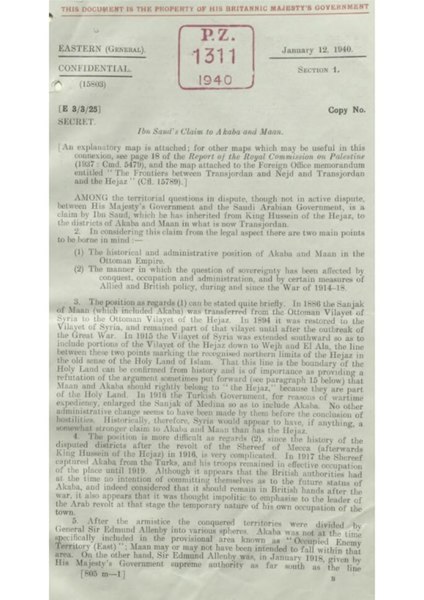
File:British Foreign office memorandum January 1940 regarding the border between Jordan and Saudi Arabia.djvu

precept (n.)

“commandment or direction given as a rule of action,” especially “an injunction as to moral conduct,” late 14c., from Old French perceptpercet (12c.) and directly from Latin praeceptum “maxim, rule of conduct, order,” noun use of neuter past participle of praecipere “give rules to, order, advise,” literally “take beforehand,” from prae “before” (see pre-) + capere (past participle captus) “to take,” from PIE root *kap- “to grasp.” For change of vowel, see biennial. Related: Preceptive; preceptory.