“fond of engaging in lawsuits,” 1620s, from French litigieux and directly from Latin litigiosus “contentious, quarrelsome,” from litigium “dispute, strife,” from litigare “to dispute, quarrel; sue, go to court” (see litigation). The word was in Middle English with a now-obsolete sense “fond of disputes” (late 14c.), making it senior in English to litigate or litigation. Related: Litigiousness; litigiosity.
Month: July 2021
Components of a case
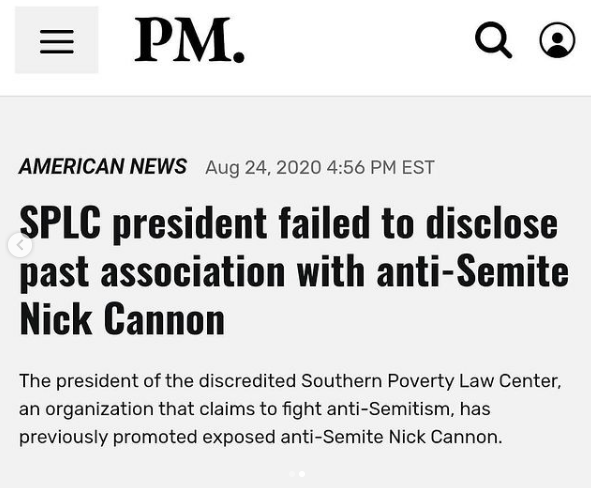
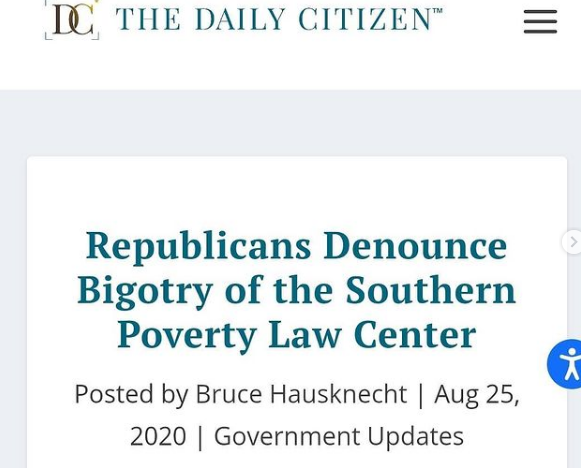
The Southern Poverty Law Center is not credible
The Southern Poverty Law Center is not credible.
Self-determination
The right of a people to self-determination is a cardinal principle in modern international law (commonly regarded as a jus cogens rule), binding, as such, on the United Nations as authoritative interpretation of the Charter’s norms.[1][2] It states that people, based on respect for the principle of equal rights and fair equality of opportunity, have the right to freely choose their sovereignty and international political status with no interference.[3]Indigenous march right to self-determination

The concept was first expressed in the 1860s, and spread rapidly thereafter.[4][5] During and after World War I, the principle was encouraged by both Soviet Premier Vladimir Lenin and United States President Woodrow Wilson.[4][5] Having announced his Fourteen Points on 8 January 1918, on 11 February 1918 Wilson stated: “National aspirations must be respected; people may now be dominated and governed only by their own consent. ‘Self determination’ is not a mere phrase; it is an imperative principle of action.”[6]
During World War II, the principle was included in the Atlantic Charter, declared on 14 August 1941, by Franklin D. Roosevelt, President of the United States, and Winston Churchill, Prime Minister of the United Kingdom, who pledged The Eight Principal points of the Charter.[7] It was recognized as an international legal right after it was explicitly listed as a right in the UN Charter.[8]
The principle does not state how the decision is to be made, nor what the outcome should be, whether it be independence, federation, protection, some form of autonomy or full assimilation.[9] Neither does it state what the delimitation between peoples should be—nor what constitutes a people. There are conflicting definitions and legal criteria for determining which groups may legitimately claim the right to self-determination.[10]
Broadly speaking, the term self-determination also refers to the free choice of one’s own acts without external compulsion.[11]
Matthew Bender & Company, Inc. v. West Publishing Company
http://www.internetlibrary.com/cases/lib_case52.cfm
http://www.internetlibrary.com/pdf/Matthew-Bender-West-Publishing-SD-NY.pdf
MATTHEW BENDER & COMPANY, INC., Plaintiff, v.
WEST PUBLISHING COMPANY, Defendant.
HYPERLAW, INC., Intervenor-Plaintiff, v.
WEST PUBLISHING COMPANY, Defendant.
U.S. District Court, Southern District of New York
94 Civ. 0589
May 19, 1997
MEMORANDUM OPINION AND ORDER