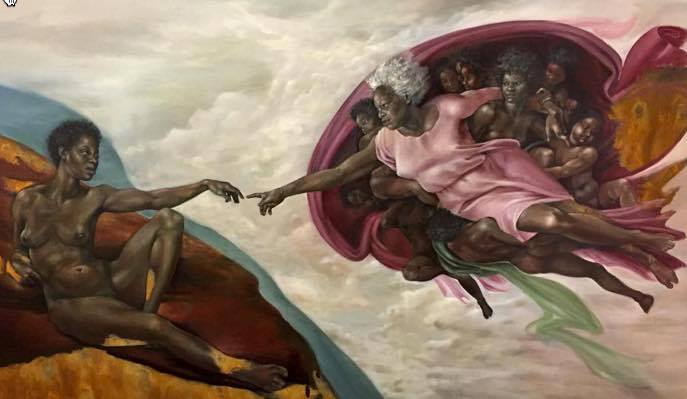
Author explains her work:
https://www.facebook.com/ajplusenglish/videos/970216163119891/
Author explains her work:
https://www.facebook.com/ajplusenglish/videos/970216163119891/
Ancient Greek for “twisted” or “reversed
adjective
ready to accept control or instruction; submissive.
François-Dominique Toussaint Louverture (French: [fʁɑ̃swa dɔminik tusɛ̃ luvɛʁtyʁ]; also known as Toussaint L’Ouverture or Toussaint Bréda; 1743 – 7 April 1803) was a Haitian general and the most prominent leader of the Haitian Revolution. During his life, Louverture first fought against the French, then for them, and then finally against France again for the cause of Haitian independence. As a revolutionary leader, Louverture’s military and political acumen helped transform the fledgling slave rebellion into a revolutionary movement. Louverture is now known as the “Father of Haiti.”


In the civil service of the United Kingdom, Her Majesty’s Exchequer, or just the Exchequer, is the accounting process of central government and the government’s current account in the Consolidated Fund. It can be found used in various financial documents including the latest departmental and agency annual accounts
c. 1300, “a chessboard, checkerboard,” from Anglo-French escheker “a chessboard,” from Old French eschequier, from Medieval Latin scaccarium “chess board” (see check (n.1); also see checker (n.2)). The governmental sense of “department of the royal household concerned with the receipt, custody, and disbursement of revenue and with judicial determination of certain causes affecting crown revenues” began under the Norman kings of England and refers to a cloth divided in squares that covered a table on which accounts of revenue were reckoned by using counters, and which reminded people of a chess board. Respelled with an -x- based on the mistaken belief that it originally was a Latin ex- word.
late 14c., “cruel or unjust use of power; the government of a tyrant,” from Old French tyranie (13c.), from Late Latin tyrannia “tyranny,” from Greek tyrannia “rule of a tyrant, absolute power,” from tyrannos “master” (see tyrant).
“Amazigh”, which is the actual correct and native term for Berbers.
We are called Amazigh, plural Imazighen, a word which means “free people” in the Indigenous Tamazight language. Among outsiders, the more common – though incorrect – name for Imazighen is Berber, a term that is largely rejected by Imazighen for its negative connotations

atom = the building block of all physical matter