PRESENTMENT, contracts. The production of a bill of exchange or promissory note to the party on whom the former is drawn, for his acceptance, or to the person bound to pay either, for payment.
2. The holder of a bill is bound, in order to hold the parties to it responsible to him, to present it in due time for acceptance, and to give notice, if it be dishonored, to all tho parties he intends to hold liable. And when a bill or note becomes payable, it must be presented for payment.
3. The principal circumstances concerning presentment, are the person to whom, the place where, and the time when, it is to be made.
Month: March 2021
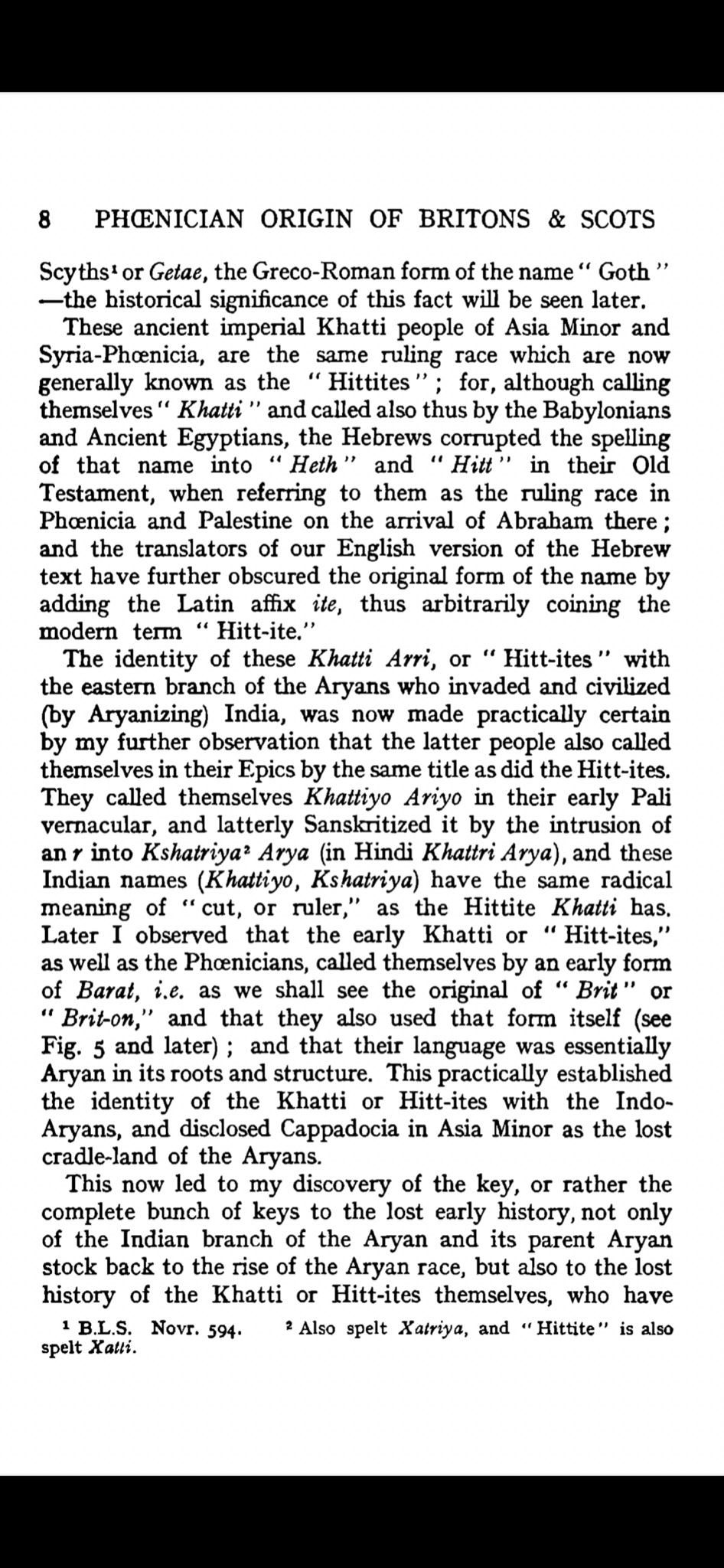
Phoenician Origin of the Britons Scots & Anglo-Saxons


Chattel Mortgages
Prime Loans as in Prime Beef
Chattel derived from Cattle (fixed & movable property) including living beings
14th Amendment established Republicans to disguise the manumit Moors branded Black to stop the Civil War
Why they started the freedsmen bureau which closed it 4 years later.
Original Article of Amendment 13. Article 12 persons of african descent cannot be U.S. Citizens
Dred Scott v. Sandford
the US Constitution was not meant to include American citizenship for black people, regardless of whether they were enslaved or free, and so the rights and privileges that the Constitution confers upon American citizens could not apply to them
Corporate Citizens
Then 14th amendment to cover up the 13th, then 15th Amendment to cover the 14th et.al
None of which were properly ratified.
manumit (v.)
early 15c., manumitten, “set (a slave or captive) free,” from Latin manumittere “to release from one’s power, set at liberty, emancipate,” literally “to send from one’s ‘hand'” (i.e. “control”), from the phrase manu mittere “release from control,” from manu, ablative of manus “power of a master,” literally “hand” (from PIE root *man- (2) “hand”) + mittere “let go, release” (see mission). Related: Manumitted; manumitting. Alternative form manumiss, manumise was sometimes used 16c.-19c.
linguistics (n.)
“the science of languages,” 1847; see linguistic; also see -ics. Also known as comparative philology (1822). An earlier word for it was linguistry (1794); logonomy (1803) also was tried.
linguistic (adj.)
“of or pertaining to the study of language,” 1824, from German linguistisch (1807); see linguist + -ic. The use of linguistic to mean “of or pertaining to language or languages” (1847) is “hardly justifiable etymologically,” according to OED, but “has arisen because lingual suggests irrelevant associations.” Related: Linguistical; linguistically.
To the science which may be formed by comparing languages, the term Linguistic has been applied by some German authors. It is not, however, generally adopted, and is liable to some objections. [“Biblical Repository,” vol. vii, no. 21, Jan. 1836]
Denotation means literal meaning and Connotation means emotional meaning.
denotative (adj.)
“having power to denote,” 1610s, from Latin denotat-, past-participle stem of denotare (see denote) + -ive. Related: Denotatively.
denote (v.)
1590s, “mark off from others; identify by a mark; be the sign or symptom of,” from French dénoter (14c.), from Latin denotare “denote, mark out,” from de- “completely” (see de-) + notare “to mark, note, make a note” (see note (v.)). Related: Denoted; denoting.
connotation (n.)
early 15c., “a concommitant symptom;” 1530s, “a secondary signification, that which is included in the meaning of a word besides its primary denotation,” from Medieval Latin connotationem (nominative connotatio), noun of action from past-participle stem of connotare “signify in addition to the main meaning,” a term in logic, literally “to mark along with,” from assimilated form of Latin com “with, together” (see con-) + notare “to mark, note, make a note,” from nota “mark, sign, means of recognition” (see note (n.)). Meaning “that which constitutes the meaning of a word” (1829) originated with J.S. Mill.
Rotarian
: a member of a major national and international service club
Spanish Inquisition 1213 AD
Treaty of Verona
King John of England <-> Pope Innoncent III (Pope of Rome)
Collective body of the church is known as the Bishopric
Popes, Cardinals et.al
One church on the planet.
Other churches are protesting daughters that broke off to compete to steal.
Slave = Slavocian (Russia went into Slavocian nations and overtook them)
Slav = Someone being subjugated
North Gate (Cosmological Name for North America)
Seat of Moroccan Empire
Overthrown from Ancient Moabite Cannonite to Roman Hands
Foundation of all Masonic Secrets
Christian Black Codes
Berlin Conference
The 12 primary tissue salts
The 12 primary tissue salts
In homeopathic medicine, 12 main tissue salts were first formulated about 20 years ago. Practitioners claim that each type of salt offers diverse benefits for putting your body into balance for optimum health.
Here are the 12 primary tissue salts and the benefits they purportedly offer:
1. Calc Fluor
- strengthens tooth enamel
- strengthens bones
- restores tissue elasticity
- helps hemorrhoids
- helps hernia pain
2. Calc Phos
- restores cells
- heals fractures
- helps the digestive system
3. Calc Sulph
4. Ferr Phos
- anti-inflammatory
- reduces fever
- accelerates healing
- reduces bleeding
5. Kali Mur
- purifies blood
- treats infection
- reduces swelling
- aids digestion
6. Kali Phos
7. Kali Sulph
- heals mucous membrane
- heals skin
- balances metabolism
- conditions your pancreas
8. Mag Phos
- eases cramps
- eases pain
- reduces spasms
- relieves tension headaches
9. Nat Mur
- balances bodily fluids
- reduces water retention
- aids digestion
- treats eczema
10. Nat Phos
- neutralizes acidity
- relieves seasickness
- treats arthritis
- aids digestion
11. Nat Sulph
- cleans pancreas
- cleans kidneys
- cleans liver
- treats cold and flu
12. Silica
- conditions skin
- conditions connective tissue
- cleanses blood
- strengthens hair and nails