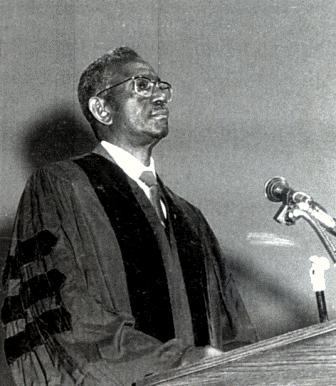
Cheikh Anta Diop

Cheikh Anta Diop - Babelio

Cheikh Anta Diop (29 December 1923 – 7 February 1986) was a Senegalese historiananthropologistphysicist, and politician who studied the human race’s origins and pre-colonial African culture. Though Diop is sometimes referred to as an Afrocentrist, he predates the concept and thus was not himself an Afrocentric scholar. However, “Diopian thought”, as it is called, is paradigmatic to Afrocentricity.[2] His work was greatly controversial and throughout his career, Diop argued that there was a shared cultural continuity across African peoples that was more important than the varied development of different ethnic groups shown by differences among languages and cultures over time.[3]

Diop’s work has posed questions about cultural bias in scientific research.[4] Cheikh Anta Diop University (formerly known as the University of Dakar), in DakarSenegal, is named after him.[5][6]

Books:

The African Origin of Civilization: Myth or Reality 1556520727 Book Cover

The African Origin of Civilization: Myth or Reality

Cheikh Anta Diop

$15.99

https://www.almendron.com/tribuna/wp-content/uploads/2019/10/african-origin-of-civilization-complete.pdf


Civilization or Barbarism: An Authentic Anthropology 1556520492 Book Cover

Civilization or Barbarism: An Authentic Anthropology

Cheikh Anta Diop

Out of Stock

https://www.sahistory.org.za/sites/default/files/archive-files3/cheikh_anta_diop_civilization_or_barbarism_an_abook4me.org_.pdf

Precolonial Black Africa: A Comparative Study of the Political and Social Systems of Europe and Black Africa, from Antiquity to the Formation of Mod 0865430705 Book Cover

Precolonial Black Africa: A Comparative Study of the Political and Social Systems of Europe and Black Africa, from Antiquity to the Formation of Mod

Cheikh Anta Diop

Out of Stock

https://zethio.files.wordpress.com/2014/04/cheikh-anta-diop-precolonial-black-africa.pdf

Black Africa: The Economic and Cultural Basis for a Federated State 1556520611 Book Cover

Black Africa: The Economic and Cultural Basis for a Federated State

Cheikh Anta Diop

http://siiasi.org/wp-content/uploads/2016/05/Black-Africa-1.pdf

http://siiasi.org/wp-content/uploads/2016/05/Black-Africa-2.pdf

$15.30
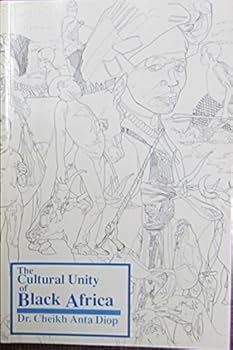
The Cultural Unity of Black Africa: The Domains of Patriarchy and of Matriarchy in Classical Antiquity 0883780496 Book Cover

The Cultural Unity of Black Africa: The Domains of Patriarchy and of Matriarchy in Classical Antiquity

Cheikh Anta Diop

Out of Stock

Towards the African Renaissance: Essays Culture and Development 0907015808 Book Cover

Towards the African Renaissance: Essays Culture and Development

Cheikh Anta Diop

Out of Stock

The Peopling of Ancient Egypt & the Deciphering of the Meroitic Script 0907015999 Book Cover

The Peopling of Ancient Egypt & the Deciphering of the Meroitic Script

Cheikh Anta Diop

Out of Stock

Cheikh Anta Diop: An African Scientist (Pan African Internationalist Handbook, Book 1) 0938818074 Book Cover

Cheikh Anta Diop: An African Scientist (Pan African Internationalist Handbook, Book 1)

Cheikh Anta Diop

Out of Stock

L'Antiquite Africaine Par L'Image 2708706594 Book Cover

L’Antiquite Africaine Par L’Image

Cheikh Anta Diop

Out of Stock

antinomy

  • n.Contradiction or opposition, especially between two laws or rules.
  • n.A contradiction between principles or conclusions that seem equally necessary and reasonable; a paradox.
  • n.The opposition of one law, rule, or principle to another.

Dr. Ivan Van Sertima

Timestamp: 42m
Dr. Ivan Van Sertima mentions Theodosius I as being responsible for the burning of Library of Alexandria.
Timestamp: 51m
Dr Ivan Van Sertima describes the star aligmnets pre-Jesus. Discusses the date, times, seconds are all Egyptian.

In 391 CE, as part of his attempt to wipe out paganism, Emperor Theodosius I officially sanctioned the destruction of the Serapeum, or Temple of Serapis at Alexandria. The destruction of the Temple was carried out under Theophilus, Bishop of Alexandria, and afterwards a Christian church was built on the site. It has been hypothesised that the daughter library of the Museum, located close to the Temple, and the Royal Library were also razed to the ground at this time. However, whilst it is plausible that manuscripts from the Serapeum library may have been destroyed during this purge, there is no evidence that the Royal Library still existed at the end the 4th century. No ancient sources mention the destruction of any library at this time, though 18th century English historian Edward Gibbon mistakenly attributes it to bishop Theophilus. https://guyanachronicle.com/2009/06/14/preserving-our-literature-heritage/