Water + Cayenne Pepper = High Blood Pressure
Water + Turmeric = Inflammation
Water + Cayenne Pepper = High Blood Pressure
Water + Turmeric = Inflammation
UN Declaration on the rights of indigenous people
International decade for people of African descent
Presidential Proclamation 7500
Executive Order 13107
December 10, 1998
By the authority vested in me as President
by the Constitution and the laws of the
United States of America, and bearing in
mind the obligations of the United States
pursuant to the International Covenant on
Civil and Political Rights (ICCPR), the Convention Against Torture and Other Cruel, Inhuman or Degrading Treatment or Punishment (CAT), the Convention on the Elimination of All Forms of Racial Discrimination
(CERD), and other relevant treaties concerned with the protection and promotion of
human rights to which the United States is
now or may become a party in the future,
it is hereby ordered as follows:
Section 1. Implementation of Human
Rights Obligations. (a) It shall be the policy
and practice of the Government of the
United States, being committed to the protection and promotion of human rights and
fundamental freedoms, fully to respect and
implement its obligations under the international human rights treaties to which it is
a party, including the ICCPR, the CAT, and
the CERD.
https://governamerica.com/documents/eo13107-implementation-human-rights-treaties.pdf
Agnihotra is a healing fire from the ancient science of Ayurveda. It is a process of purifying the atmosphere through a specially prepared fire performed at sunrise and sunset daily. Anyone in any walk of life can do Agnihotra and heal the atmosphere in his/her own home. Thousands of people all over the world have experienced that Agnihotra reduces stress, leads to greater clarity of thought, improves overall health, gives one increased energy, and makes the mind more full of love. It is a great aid to drug and alcohol deaddiction. Agnihotra also nourishes plant life and neutralizes harmful radiation and pathogenic bacteria. It harmonizes the functioning of Prana (life energy) and can be used to purify water resources.
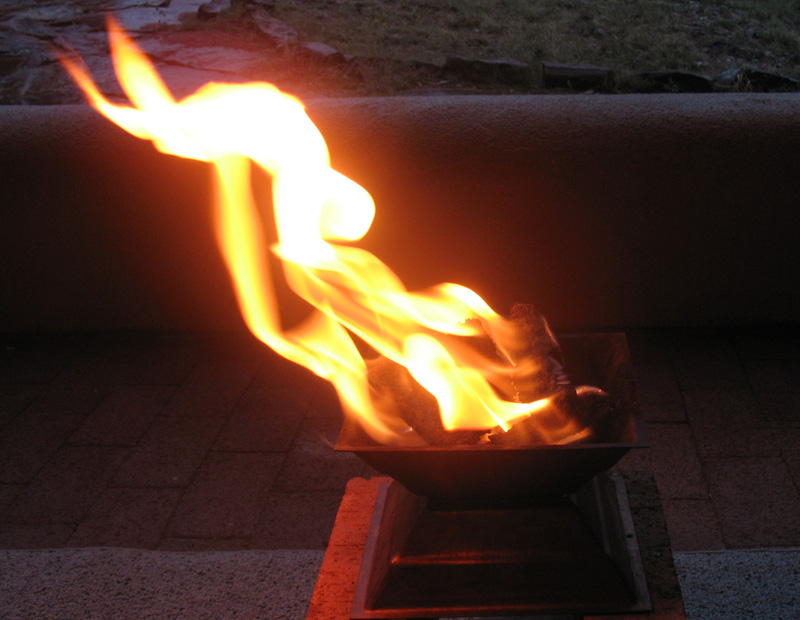
Agnihotra is an ancient science given in Sanskrit language at the time of creation. Sanskrit was never anyone’s mother tongue; it is a language of vibration. We can make changes in the atmosphere with Sanskrit mantras and fire prepared with specific organic substances, timed to the sunrise/sunset biorhythm. The fire is prepared in a small copper pyramid of specific size and shape. Brown rice, dried cowdung (manure) and ghee (clarified unsalted butter) are the substances burned. Exactly at sunrise or sunset the mantras are spoken and a small amount of rice and ghee is given to the fire. There is not just energy from the fire; subtle energies are created by the rhythms and mantras. These energies are generated or thrust into the atmosphere by fire. This, in addition to the qualities of the materials burned, produces the full effect of this healing HOMA (healing fire). Much healing energy emanates from the Agnihotra pyramid.
Offer
(Intent included)
Acceptance
Compliance
CoreCivic, formerly the Corrections Corporation of America, is a company that owns and manages private prisons and detention centers and operates others on a concession basis. Co-founded in 1983 in Nashville, Tennessee by Thomas W. Beasley, Robert Crants, and T
Financial instruments are monetary contracts between parties. They can be created, traded, modified and settled. They can be cash, evidence of an ownership interest in an entity, or a contractual right to receive or deliver.
International Accounting Standards IAS 32 and 39 define a financial instrument as “any contract that gives rise to a financial asset of one entity and a financial liability or equity instrument of another entity”.[1]
Financial instruments may be categorized by “asset class” depending on whether they are equity-based (reflecting ownership of the issuing entity) or debt-based (reflecting a loan the investor has made to the issuing entity). If the instrument is debt it can be further categorized into short-term (less than one year) or long-term. Foreign exchange instruments and transactions are neither debt- nor equity-based and belong in their own category.
Financial instruments can be either cash instruments or derivative instruments:
| Asset class | Instrument type | |||
|---|---|---|---|---|
| Securities | Other cash | Exchange-traded derivatives | OTC derivatives | |
| Debt (long term) > 1 year | Bonds | Loans | Bond futures Options on bond futures | Interest rate swaps Interest rate caps and floors Interest rate options Exotic derivatives |
| Debt (short term) ≤ 1 year | Bills, e.g. T-bills Commercial paper | Deposits Certificates of deposit | Short-term interest rate futures | Forward rate agreements |
| Equity | Stock | N/A | Stock options Equity futures | Stock options Exotic derivatives |
| Foreign exchange | N/A | Spot foreign exchange | Currency futures | Foreign exchange options Outright forwards Foreign exchange swaps Currency swaps |
Some instruments defy categorization into the above matrix, for example repurchase agreements.
The gain or loss on a financial instrument is as follows:
| Instrument Type | Categories | Measurement | Gains and losses |
|---|---|---|---|
| Assets | Loans and receivables | Amortized costs | Net income when asset is derecognized or impaired (foreign exchange and impairment recognized in net income immediately) |
| Assets | Available for sale financial assets | Deposit account – fair value | Other comprehensive income (impairment recognized in net income immediately) |
In diplomacy, an attaché is a person who is assigned (“to be attached”) to the diplomatic or administrative staff of a higher placed person or another service or agency.[citation needed] Although a loanword from French, in English the word is not modified according to gender.[1][2]
An attaché is normally an official, who serves either as a diplomat or as a member of the support staff, under the authority of an ambassador or other head of a diplomatic mission, mostly in intergovernmental organizations or international non-governmental organisations or agencies. Attachés monitor various issues related to their area of specialty (see examples below) that may require some action. To this end, attachés may undertake the planning for events to be attended, decisions which will be taken, managing arrangements and agendas, conducting research, and acting as a representative of the interests of their state when necessary, to the types of organizations mentioned above, and also to national academies and to industry.
Sometimes an attaché has special responsibilities or expertise. Examples include a cultural attaché, customs attaché, police officer attaché, labor attaché, legal attaché, liaison officer attaché, military/defense attaché, press attaché, agricultural attaché, commercial attaché, maritime attaché and science attaché.
“government by bureaus,” especially “tyrannical officialdom,” excessive multiplication of administrative bureaus and concentration of power in them, in reference to their tendency to interfere in private matters and be inefficient and inflexible, 1818, from French bureaucratie, coined by French economist Jean Claude Marie Vincent de Gournay (1712-1759) on model of democratie, aristocratie, from bureau “office,” literally “desk” (see bureau) + Greek suffix -kratia denoting “power of” (see -cracy).
That vast net-work of administrative tyranny … that system of bureaucracy, which leaves no free agent in all France, except for the man at Paris who pulls the wires. [J.S. Mill, “Westminster Review” XXVIII, 1837]
bureaucrat, &c. The formation is so barbarous that all attempt at self-respect in pronunciation may perhaps as well be abandoned. [Fowler]