Title 28 USC 3002 Section 15

WHAT? – Title 28 USC 3002 Section 15: THE UNITED STATES is a CORPORATION and Not a Government

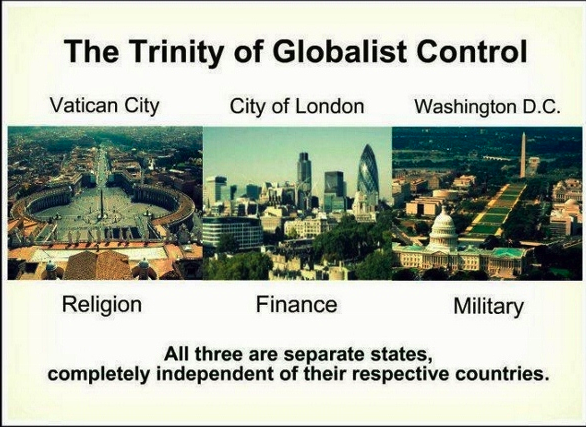
What they never taught you in high school civics class: The UNITED STATES of AMERICA is a corporation. See UNITED STATES CODE  Title 28 3002 (15)  where it is stated unequivocally that the UNITED STATES is a corporation. Washington, D.C. is a sovereign city-state, not bound by any laws or treatises that the 50 states in the Union are (just as the City of London is not part of England proper and the Vatican is also a sovereign city-state).

THE UNITED STATES is a CORPORATION There are Two Constitutions

The people believed by most to be representing Americans in D.C. are immune from virtually all laws and treatises of the USA. These corporate CEOs known as “congressmen” and “congresswomen” are representing a corporation known as “United States” which makes most of its profits off of wars, environmental destruction and a fiat paper money system. The only reason this paper “money” has any value at all is because the USA and NATO force OPEC countries to exclusively sell oil with Federal Reserve notes (U.S. dollars). If they do not, they get “Iraq-ed,” “Libya-ed,” and/or “Afghanistan-ed.” The Bank of Israel, aka the “Federal” Reserve (a private corporation), prints and administers this fiat paper “money” worldwide, while the Washington, D.C.-based IMF and World Bank play video game economics with the rest of the world. Corporations are “people with rights.” See Citizens United v. Federal Election Commission, 558 U.S. 50 (2010).

And this is why your “vote” this coming November matters about as much as your life does to these people.

Title 28 USC 3002 Section 15 (A) (B) (C) states that THE UNITED STATES is a FEDERAL CORPORATION and not a Government (note the capitalization, indicating the corporation, not the Republic), including the Judiciary Procedural Section. The de jure states in the form of Republics and the de jure united States were subsumed, or set aside by the Bankruptcy Act of 1933.

All US offices, officers and departments are working under a “defacto” status only under the emergency war powers. This new form of government is known as a democracy (Instead of Republic) being and established communist/socialist order under the “The New Governor of America” – Congressional Record March 17th, 1993, Vol 33, Page H-1303. It is established fact that the US Fed Government has been dissolved under the Emergency Banking Act March 9, 1933 48 Stat. 1, Public Law 89-719 Declared by FDR.

Being Bankrupt and insolvent H.J.R. 192, 73rd. Congress in session June 5, 1933- Joint Resolution to suspend the Gold Standard and Abrogate the Gold Clause – Dissolved the Sovereign Authority of the US and the official capacities of all US Gov Offices Officers and Depts and is further evidence the the US Federal Government exists today only in Name only. US being in Martial Law since 1933 and as far back as civil war Senate Report 93-549 (1973)
Us Citizens Declared Enemies of US By FDR executive order 2040 and ratified by congress march 9th 1933 48 Stat 1. FDR changed the meaning of TRADING WITH THE ENEMY ACT of dec 6th 1917 by changing the word “without” to citizens “within”the US. a Legal Name is a “Prisoner of War” Name. Fictitious “nom de guerre” name for a non-living entity: also referred to as the strawman and or transmitting utility. JOHN DOE -Name in all caps which is format called Capitus Dimenutio Maxima.

Capitus Diminutio Maxima (Maximum Diminished Status) means that a mans condition changes from freedom to bondage and becomes a slave or item of inventory – Blacks Law Dictionary Revised 4th Ed. 1968. A fictional persona being surety for the debt as fiction in commerce also known as “Ens Legis” which means “legal entity” It is non-human and “civilly dead”. That is not you… unless you are a fiction. Realize with your REAL EYES ;).

http://alexanderhiggins.com/title-28-usc-3002-section-15-the-united-states-is-a-corporation-and-not-a-government/

denounce (v.)

early 14c., “announce, make known in a formal manner” (a sense now obsolete), from Old French denoncier (12c., Modern French dénoncer) and directly from Latin denuntiare “to announce, proclaim; denounce, menace; command, order,” from de- “down” + nuntiare “proclaim, announce,” from nuntius “messenger” (from PIE root *neu- “to shout”).

The negative sense in English developed (probably encouraged by other words in de-) via the meanings “proclaim as cursed, excommunicated, removed from office” (early 14c.); “formally or publicly threaten to do” (1630s); “declare or proclaim to be cursed, wicked, or evil” (1660s). The meaning “make formal or public accusation against, inform against, accuse” (especially in turning on one’s co-conspirators) is from late 15c. Related: Denounceddenouncing.

implicate (v.)

early 15c., “to convey (truth) in a fable,” from Latin implicatus, past participle of implicare “to involve, entwine, entangle, embrace,” from assimilated form of in- “into, in, on, upon” (from PIE root *en “in”) + plicare “to fold” (from PIE root *plek- “to plait”). From c. 1600 as “intertwine, wreathe.” Meaning “involve (someone) in a crime, charge, etc.; show (someone) to be involved” is from 1797. Related: Implicatedimplicating.

42 U.S. Code § 2000e.Definitions

For the purposes of this subchapter—(a)The term “person” includes one or more individuals, governments, governmental agencies, political subdivisions, labor unions, partnerships, associations, corporations, legal representatives, mutual companies, joint-stock companies, trusts, unincorporated organizations, trustees, trustees in cases under title 11, or receivers.(b)The term “employer” means a person engaged in an industry affecting commerce who has fifteen or more employees for each working day in each of twenty or more calendar weeks in the current or preceding calendar year, and any agent of such a person, but such term does not include (1) the United States, a corporation wholly owned by the Government of the United States, an Indian tribe, or any department or agency of the District of Columbia subject by statute to procedures of the competitive service (as defined in section 2102 of title 5), or (2) a bona fide private membership club (other than a labor organization) which is exempt from taxation under section 501(c) of title 26, except that during the first year after March 24, 1972, persons having fewer than twenty-five employees (and their agents) shall not be considered employers.(c)The term “employment agency” means any person regularly undertaking with or without compensation to procure employees for an employer or to procure for employees opportunities to work for an employer and includes an agent of such a person.(d)The term “labor organization” means a labor organization engaged in an industry affecting commerce, and any agent of such an organization, and includes any organization of any kind, any agency, or employee representation committee, group, association, or plan so engaged in which employees participate and which exists for the purpose, in whole or in part, of dealing with employers concerning grievances, labor disputes, wages, rates of pay, hours, or other terms or conditions of employment, and any conference, general committee, joint or system board, or joint council so engaged which is subordinate to a national or international labor organization.(e)labor organization shall be deemed to be engaged in an industry affecting commerce if (1) it maintains or operates a hiring hall or hiring office which procures employees for an employer or procures for employees opportunities to work for an employer, or (2) the number of its members (or, where it is a labor organization composed of other labor organizations or their representatives, if the aggregate number of the members of such other labor organization) is (A) twenty-five or more during the first year after March 24, 1972, or (B) fifteen or more thereafter, and such labor organization—(1)is the certified representative of employees under the provisions of the National Labor Relations Act, as amended [29 U.S.C. 151 et seq.], or the Railway Labor Act, as amended [45 U.S.C. 151 et seq.];(2)although not certified, is a national or international labor organization or a local labor organization recognized or acting as the representative of employees of an employer or employers engaged in an industry affecting commerce; or(3)has chartered a local labor organization or subsidiary body which is representing or actively seeking to represent employees of employers within the meaning of paragraph (1) or (2); or(4)has been chartered by a labor organization representing or actively seeking to represent employees within the meaning of paragraph (1) or (2) as the local or subordinate body through which such employees may enjoy membership or become affiliated with such labor organization; or(5)is a conference, general committee, joint or system board, or joint council subordinate to a national or international labor organization, which includes a labor organization engaged in an industry affecting commerce within the meaning of any of the preceding paragraphs of this subsection.(f)The term “employee” means an individual employed by an employer, except that the term “employee” shall not include any person elected to public office in any State or political subdivision of any State by the qualified voters thereof, or any person chosen by such officer to be on such officer’s personal staff, or an appointee on the policy making level or an immediate adviser with respect to the exercise of the constitutional or legal powers of the office. The exemption set forth in the preceding sentence shall not include employees subject to the civil service laws of a State government, governmental agency or political subdivision. With respect to employment in a foreign country, such term includes an individual who is a citizen of the United States.(g)The term “commerce” means trade, traffic, commerce, transportation, transmission, or communication among the several States; or between a State and any place outside thereof; or within the District of Columbia, or a possession of the United States; or between points in the same State but through a point outside thereof.(h)The term “industry affecting commerce” means any activity, business, or industry in commerce or in which a labor dispute would hinder or obstruct commerce or the free flow of commerce and includes any activity or industry “affecting commerce” within the meaning of the Labor-Management Reporting and Disclosure Act of 1959 [29 U.S.C. 401 et seq.], and further includes any governmental industry, business, or activity.(i)The term “State” includes a State of the United States, the District of Columbia, Puerto Rico, the Virgin Islands, American Samoa, Guam, Wake Island, the Canal Zone, and Outer Continental Shelf lands defined in the Outer Continental Shelf Lands Act [43 U.S.C. 1331 et seq.].(j)The term “religion” includes all aspects of religious observance and practice, as well as belief, unless an employer demonstrates that he is unable to reasonably accommodate to an employee’s or prospective employee’s religious observance or practice without undue hardship on the conduct of the employer’s business.(k)The terms “because of sex” or “on the basis of sex” include, but are not limited to, because of or on the basis of pregnancy, childbirth, or related medical conditions; and women affected by pregnancy, childbirth, or related medical conditions shall be treated the same for all employment-related purposes, including receipt of benefits under fringe benefit programs, as other persons not so affected but similar in their ability or inability to work, and nothing in section 2000e–2(h) of this title shall be interpreted to permit otherwise. This subsection shall not require an employer to pay for health insurance benefits for abortion, except where the life of the mother would be endangered if the fetus were carried to term, or except where medical complications have arisen from an abortion: Provided, That nothing herein shall preclude an employer from providing abortion benefits or otherwise affect bargaining agreements in regard to abortion.(l)The term “complaining party” means the Commission, the Attorney General, or a person who may bring an action or proceeding under this subchapter.(m)The term “demonstrates” means meets the burdens of production and persuasion.(n)The term “respondent” means an employer,employment agencylabor organization, joint labor-management committee controlling apprenticeship or other training or retraining program, including an on-the-job training program, or Federal entity subject to section 2000e–16 of this title.(Pub. L. 88–352, title VII, § 701, July 2, 1964, 78 Stat. 253Pub. L. 89–554, § 8(a), Sept. 6, 1966, 80 Stat. 662Pub. L. 92–261, § 2, Mar. 24, 1972, 86 Stat. 103Pub. L. 95–555, § 1, Oct. 31, 1978, 92 Stat. 2076Pub. L. 95–598, title III, § 330, Nov. 6, 1978, 92 Stat. 2679Pub. L. 99–514, § 2, Oct. 22, 1986, 100 Stat. 2095Pub. L. 102–166, title I, §§ 104, 109(a), Nov. 21, 1991, 105 Stat. 1074, 1077.)

https://www.law.cornell.edu/uscode/text/42/2000e
28 U.S. Code § 3002.Definitions – Paragraph 15

As used in this chapter:(1)Counsel for the United States” means—(A)United States attorney, an assistant United States attorney designated to act on behalf of the United States attorney, or an attorney with the United States Department of Justice or with a Federal agency who has litigation authority; and(B)any private attorney authorized by contract made in accordance with section 3718 of title 31 to conduct litigation for collection of debts on behalf of the United States.(2)Court” means any court created by the Congress of the United States, excluding the United States Tax Court.(3)Debt” means—(A)an amount that is owing to the United States on account of a direct loan, or loan insured or guaranteed, by the United States; or(B)an amount that is owing to the United States on account of a fee, duty, lease, rent, service, sale of real or personal property, overpayment, fine, assessment, penalty, restitution, damages, interest, tax, bail bond forfeiture, reimbursement, recovery of a cost incurred by the United States, or other source of indebtedness to the United States, but that is not owing under the terms of a contract originally entered into by only persons other than the United States;and includes any amount owing to the United States for the benefit of an Indian tribe or individual Indian, but excludes any amount to which the United States is entitled under section 3011(a).(4)Debtor” means a person who is liable for a debt or against whom there is a claim for a debt.(5)Disposable earnings” means that part of earnings remaining after all deductions required by law have been withheld.(6)Earnings” means compensation paid or payable for personal services, whether denominated as wages, salary, commission, bonus, or otherwise, and includes periodic payments pursuant to a pension or retirement program.(7)Garnishee” means a person (other than the debtor) who has, or is reasonably thought to have, possession, custody, or control of any property in which the debtor has a substantial nonexempt interest, including any obligation due the debtor or to become due the debtor, and against whom a garnishment under section 3104 or 3205 is issued by a court.(8)Judgment” means a judgment, order, or decree entered in favor of the United States in a court and arising from a civil or criminal proceeding regarding a debt.(9)Nonexempt disposable earnings” means 25 percent of disposable earnings, subject to section 303 of the Consumer Credit Protection Act.(10)Person” includes a natural person (including an individual Indian), a corporation, a partnership, an unincorporated association, a trust, or an estate, or any other public or private entity, including a State or local government or an Indian tribe.(11)Prejudgment remedy” means the remedy of attachment, receivership, garnishment, or sequestration authorized by this chapter to be granted before judgment on the merits of a claim for a debt.(12)Property” includes any present or future interest, whether legal or equitable, in real, personal (including choses in action), or mixed property, tangible or intangible, vested or contingent, wherever located and however held (including community property and property held in trust (including spendthrift and pension trusts)), but excludes—(A)property held in trust by the United States for the benefit of an Indian tribe or individual Indian; and(B)Indian lands subject to restrictions against alienation imposed by the United States.(13)Security agreement” means an agreement that creates or provides for a lien.(14)State” means any of the several States, the District of Columbia, the Commonwealth of Puerto Rico, the Commonwealth of the Northern Marianas, or any territory or possession of the United States.

(15)“United States” means—(A)a Federal corporation;(B)an agency, department, commission, board, or other entity of the United States; or(C)an instrumentality of the United States.

(16)United States marshal” means a United States marshal, a deputy marshal, or an official of the United States Marshals Service designated under section 564.(Added Pub. L. 101–647, title XXXVI, § 3611, Nov. 29, 1990, 104 Stat. 4933.)

https://www.law.cornell.edu/uscode/text/28/3002

Federal corporations cannot speak to the living

tender (n.1)

“person who tends another,” late 15c., probably an agent noun formed from Middle English tenden “attend to” (see tend (v.2)); later extended to locomotive engineers (1825) and barmen (1883). The meaning “small boat used to attend larger ones” first recorded 1670s.

tender (adj.)

“soft, easily injured,” early 13c., from Old French tendre “soft, delicate; young” (11c.), from Latin tenerem (nominative tener) “soft, delicate; of tender age, youthful,” from a derivative of PIE root *ten- “to stretch,” on the notion of “stretched,” hence “thin,” hence “weak” or “young.” Compare Sanskrit tarunah “young, tender,” Greek teren “tender, delicate,” Armenian t’arm “young, fresh, green.”

Meaning “kind, affectionate, loving” first recorded early 14c. Meaning “having the delicacy of youth, immature” is attested in English from early 14c. Related: TenderlytendernessTender-hearted first recorded 1530s.